


Across the country, higher education institutions are facing a mounting crisis. 16 institutions fully shut down in 2025; two-thirds of all colleges faced either consistent financial losses, enrollment declines, or decreasing government funding and endowment values between 2014 and 2023. These are recent figures, but they come after years of hardship. During moments of financial strain, the educational models and nontraditional learning opportunities central to these institutions are placed at severe risk. Responding to new financial needs has left many universities more beholden to donors and governments, prioritizing efficiency over the exploratory learning and academic curiosity liberal arts colleges are intended to protect, universities responding to financial concerns and considering future developments have repeatedly failed to prioritize the educational values and institutional independence that define their purpose. The pattern is consistent: financial pressure becomes the justification for narrowing the pool of who gets to decide.
This crisis has several roots. Beginning with the high school class of 2026, a noticeable decline in birth rates after 2008 is expected to contribute to reduced applications for incoming freshman classes, disproportionately affecting small-enrollment schools. Additionally, many families are prioritizing pre-professional education: fields of study with a direct path to employment. The Education Department recently selected professional students in 11 fields, including dentistry, law, and theology, who can borrow $50,000 annually, limiting others to an annual cap of $20,500. At the undergraduate level, several small liberal arts colleges have been forced to merge, cut staff, or end low-enrollment programs. Wealthier institutions face less drastic and immediate concerns, especially with regard to declining enrollment. Still, rising costs, new expansion projects, and recent irregularities with government funding, among other factors, have produced temptation toward unilateral administrative decisions that prioritize cost efficiency over institutional values.
Harvard recently announced the consolidation of its Writing Center; its director was laid off, and tutors will likely begin working under the Academic Resource Center. This is part of a larger scheme of bureaucratic changes intended to address Harvard’s $365 million structural deficit. Financial stress was heightened by funding disputes with the Trump administration, an increase in endowment taxes, and higher construction costs for both campus expansion and maintenance of older infrastructure. It now seeks places to “efficiently” save costs, though cuts to staffing positions justified by financial turmoil have been condemned for lacking a true understanding of institutional needs, especially when financial concerns could be better addressed through a previously-instituted hiring freeze. Harvard students and faculty have especially strongly condemned the closure of the Writing Center. Most consider the Center’s relatively low financial burden an insufficient reason to disband a program that symbolizes and encourages critical thinking among students, particularly as AI poses a threat to the value of human reasoning in education.
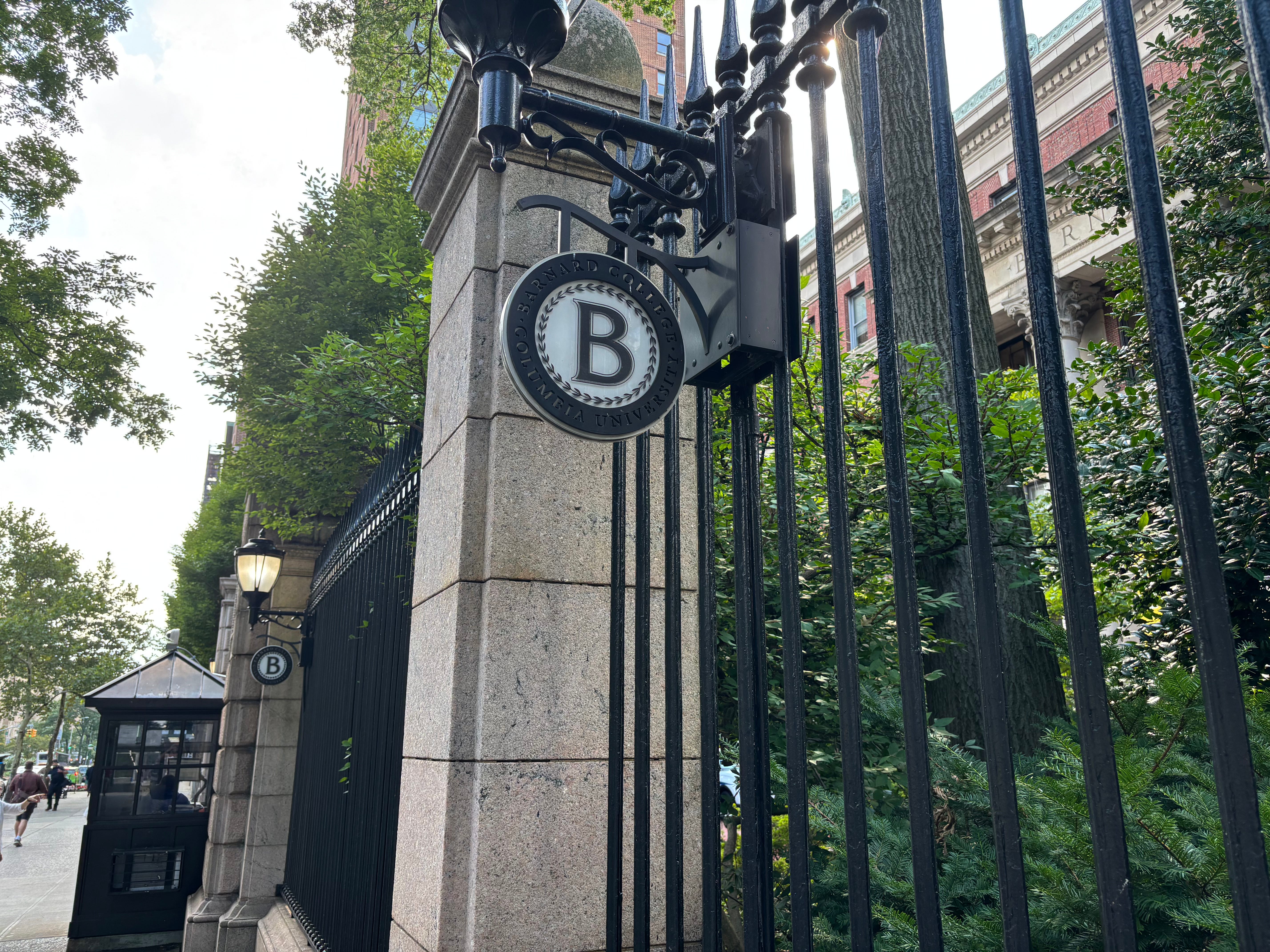
Even more immediate and serious financial stress is closer to home: Barnard College is currently $273.59 million in debt. The situation has become so severe that, in August 2024, the S&P Global Ratings report revised Barnard’s outlook from ‘stable’ to ‘negative,’ blaming mostly rising expenses and crediting turmoil in senior leadership for a failure to address financial concerns. Furthermore, compared to other women’s colleges, Barnard’s endowment is rather small: the school is the only member of the “Seven Sisters” with an endowment worth less than $1 billion. This makes high inflation and labor costs much harder to absorb.
Barnard’s plan to address it relies mostly on decreasing benefits for faculty. It includes higher adjusted healthcare costs for faculty, changes to travel and business expense policies, delayed tuition benefits, and more. In addition, several unfilled positions have been eliminated, and 77 full-time employees were laid off in 2025. Most notably, Barnard’s Slavic Studies program is on pause after its sole faculty member was laid off. Barnard’s faculty union, AAUP, noted that declaring a financial crisis can serve as a tactic to introduce and defend cuts on employee spending. Declaring a crisis also changes who is consulted: decisions that would normally involve processes including faculty and students can be made without them. Despite the abysmal outlook for faculty and its rapidly growing deficit, the school invested heavily in the construction of the Roy and Diana Vagelos Science Center, set to open in fall 2026, digging itself an additional $80 million in debt.
While still in an operational deficit, Barnard’s financial report in fiscal year 2025 seemed more promising than in previous years. The improvement was purchased with those cuts. Revenue improved not only from a 5.5% increase in tuition costs and an increase of about 50 students, but also from changes in spending on staff and administration and reduced cross-registration with Columbia. Barnard’s payments to Columbia decreased from $15.6 million in FY24 to $8.6 million in FY25 as it introduced a new guideline for freshman students to take all their classes, with very few exceptions, at Barnard.
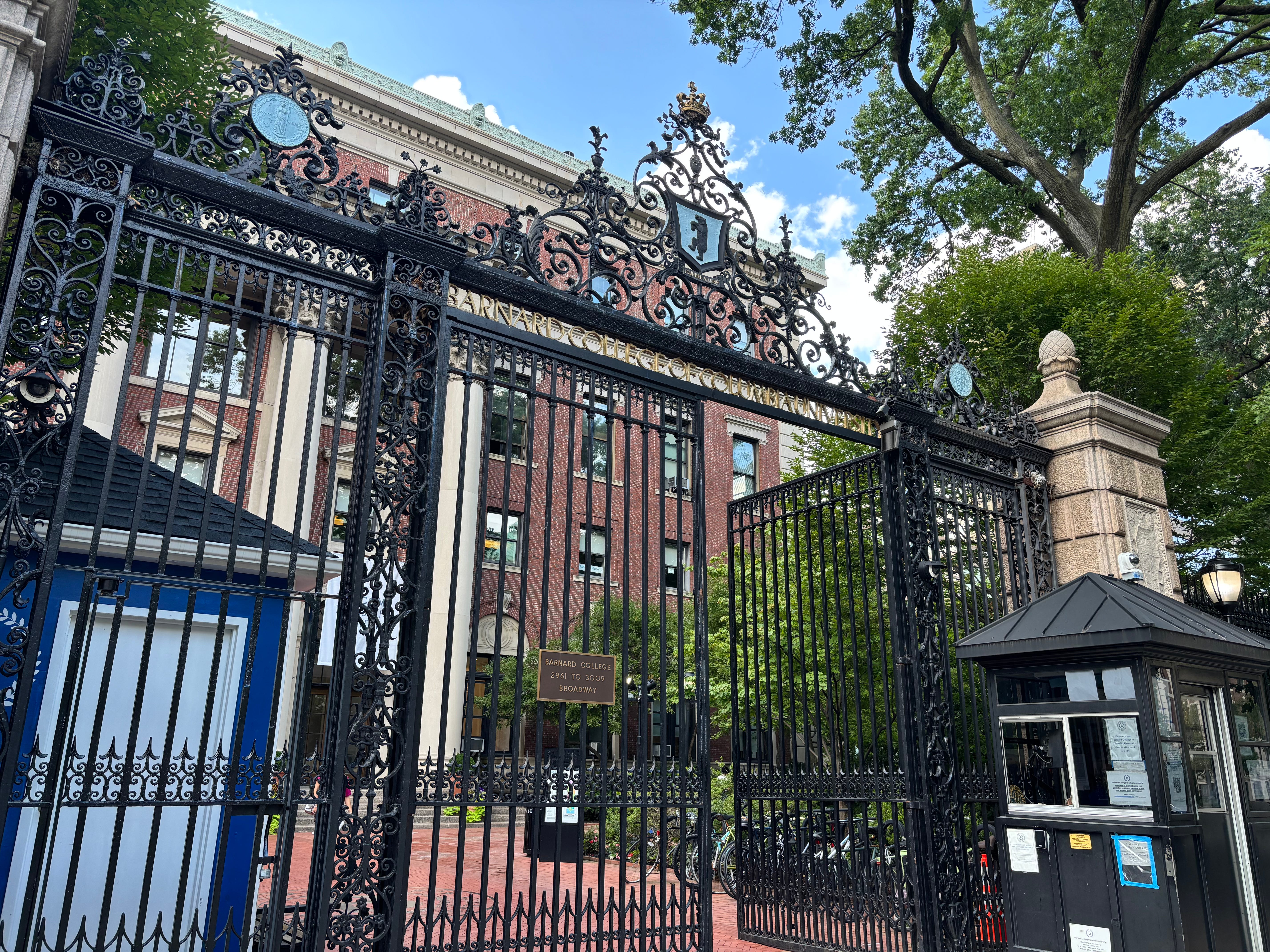
Across the street, Columbia University faced intense pushback after releasing plans to expand its student body. The University has promised substantial investment in fitness, health, dining, student, and library services to accommodate the expansion. More immediate concerns remain, as a class of 2029 20% larger than previous ones has been haphazardly accommodated through the short-notice displacement of General Studies students from their dorms, removal of graduate students’ access to certain dining halls, and increases in Core Curriculum class sizes. Former Interim President Claire Shipman said the expansion was her decision; the initial expansion of the class of 2029 occurred because of financial pressure from the Trump administration, and, after the University settled with the administration, later plans to increase class size were made to generate more revenue.
Following outrage from faculty and students alike, the University abandoned its original plan to expand the student body by 20% as the Trump administration’s original threats were largely rescinded through the University’s settlement with the White House. Still, Columbia’s FY25 report indicates that its operating surplus is below its recent average. Its newer “modest” plan seeks to add 125 students to the next first-year class and incrementally raise that to 200 and 250 students, respectively, for the next two incoming classes. Together, those additions amount to an increase closer to 15%. The University has defended its expansion plans, arguing that it addressed critiques through proposed investments and dialogue.
Nevertheless, strong opposition to the plan has continued, with arguments that the financial relief from additional tuition revenue will be offset for the University by higher costs and what could be a severe drop in quality of student life. Still, Columbia has prioritized its finances following the $221 million settlement with the Trump administration, increasing costs of providing financial aid, continued campus expansion into Manhattanville, and higher operational costs outpacing revenue growth.
Beyond the possible damage of austerity measures to institutions, maintaining independence within universities is made harder in times of economic downturn. Reliance on a small set of private donors for vital funds and can open the door to outsized influence by individuals. In 2025, Barnard’s total “pledges receivable” amounted to $32.55 million. As the College reported, “As of June 30, 2025 and 2024, 45% and 54%, respectively, of the total of gross pledges receivable and pledge receivables for capital projects were due from four donors.” This concentration of financial power can leave institutions vulnerable to donor demands.
Columbia’s much larger donor base provides a different level of security. Its endowment is $15.9 billion and its donor base stems from roughly 6,700 funds, broader than Barnard’s 1,000, and its Ivy League status shields it from the effect of declining enrollment amongst otherwise similar “smaller liberal arts schools.” Still, this level of security is not the standard for private institutions facing growing doubts about the value of a liberal arts education, rising costs, and unstable government support. And, even for Columbia, power imbalances between the Board of Trustees and the University Senate remain. Several vital decisions, including changes to the disciplinary processes, were made with little to no democratic process within the University community. This concentration of authority reveals the same pattern as in Harvard’s Writing Center closure and Baranrd’s faculty cuts. When efficiency and financial security have become the sole priorities of institutions, collective deliberation and shared governance have been neglected. Maintaining processes that account for the broader goals of a University community both embodies and protects long held institutional values.
Public schools are also no stranger to financial struggle. Before 2020, one-third of all public institutions of higher education lost money each year. After the COVID-19 pandemic, however, strong state funding and returns to enrollment reduced this figure to only 15 to 20% of public schools. Of course, as we have all been painfully aware in recent years, relying on government money for education and research spending creates unexpected or sudden removal and can infringe upon the independence of a university. During the Trump administration’s furious slash-and-burn operation, specific Columbia programs were targeted and the public schools that fuel the nation’s science research were broadly exposed to proposed cuts to NIH, NSF, and NASA budgets. It’s clear that, regardless of the source, financial strain builds a susceptibility to outside influence that can infringe upon a university’s autonomy.
Balancing the need for fiscal responsibility and protecting educational institutions is a difficult task with no clear solution. Administrators have a real case: deficits left unaddressed compound, and a college that runs out of money protects nothing. The objection is not to cutting, but to cutting by decree. Still, high-ranking universities influence the broader course of higher education, and Columbia, which reported an operating surplus over $100 million, is uniquely positioned to lead the response to these challenges. Avoiding the pitfalls of unilateral decision-making and preserving the role of the student body and faculty in building a sustainable future together is vital. That happens through process: putting expansion and budget decisions before the University Senate, publishing the reasoning behind cuts, and requiring consultation with all stakeholders rather than treating it as a courtesy. Independence in our classrooms depends on it.
Ms. Simons is a sophomore at Columbia College studying mathematics and philosophy. She is a staff editor for Sundial.
The opinions expressed in this article are solely those of the author and do not necessarily reflect the views of the Sundial editorial board as a whole or any other members of the staff.
