


Editor’s Note:
On April 15, 2026, The Columbia Daily Spectator broke the news that Barnard was not renewing its contract with Professor John Wright, the only professor in its Slavic Studies department. This effectively put the Slavic Studies program at Barnard on pause, as a spokesperson for Barnard did not announce plans to hire new faculty in the department for the 2026-2027 school year, according to Spectator.
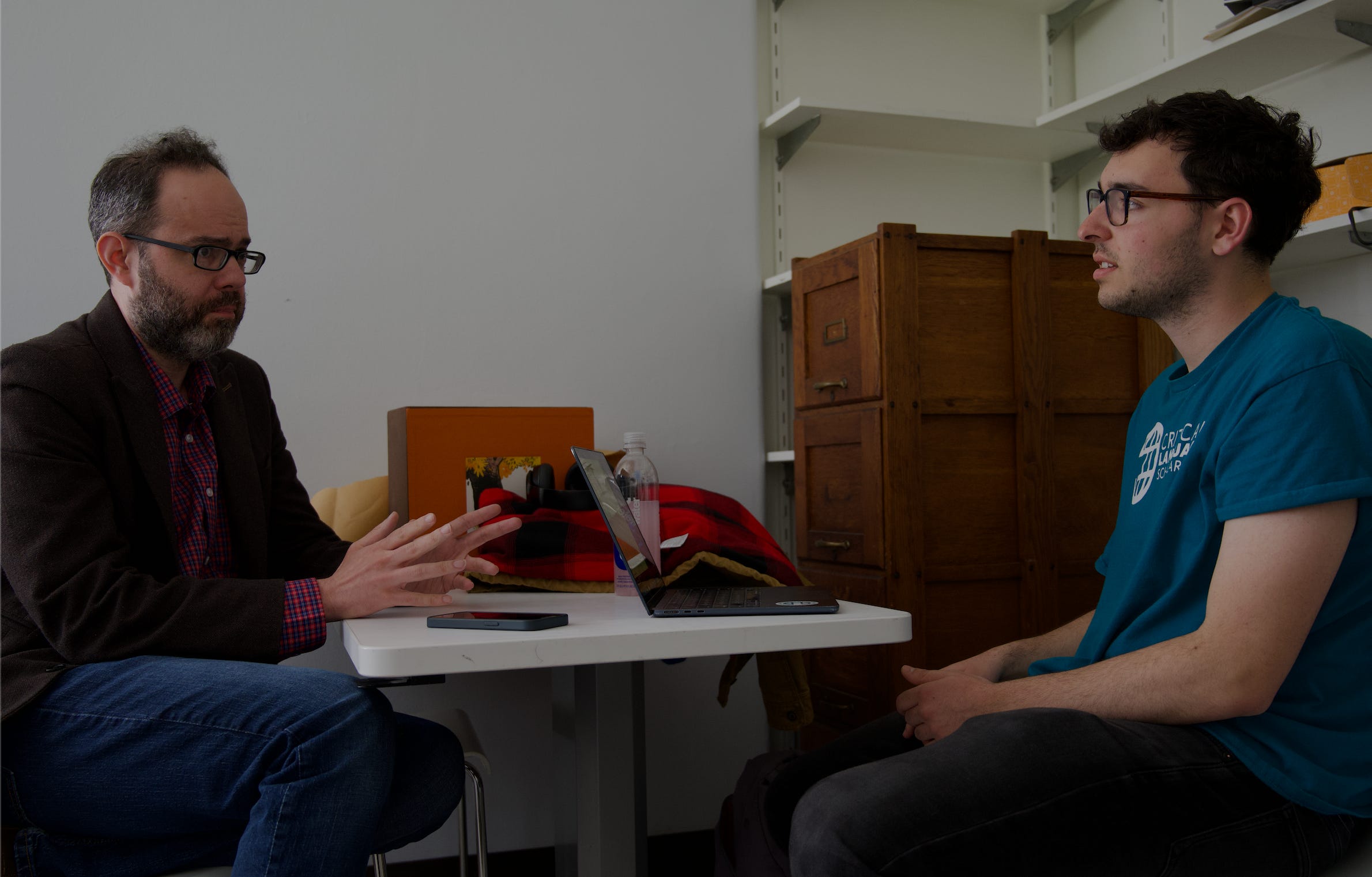
Subsequently, a petition was started to “Keep Slavic Studies and John Wright,” garnering over one thousand signatures as of the time of this article’s publication. Our Editor Emeritus and former student of Professor Wright, Alex, spoke with him on May 4, the last day of classes, about his time at Columbia and Barnard, his thoughts on the outpouring of public support for him, and finding peace in uncertain plans for the future—for him and new graduates alike.
— Xinyan Chen, Deputy Editor
Alex Nagin (AN): How are you feeling right now, in this moment?
John Wright (JW): Well, right now has been good. I’m glad to be talking to you, and it’s nice to see you.
Otherwise, I’ll just be honest with you—my last chance to be honest as a professor. It’s been extremely bizarre. Nobody wants to lose their job, but I think most people, over an entire life, never get this unexpected public outpouring—the kind of response that it seems like most people would not fake. Like, “Oh, I’ll write this nice thing about him or the courses.” I would never have even imagined anything like that. Never would have fantasized about it.
So there’s that, and at the same time—as you said—I’m thinking, how many more trips do I take to haul this stuff out, take my books home? And then what am I supposed to do with myself? So it’s been a very weird mix, with a lot of mood swings, I would say.
It’s been very unpleasant. I mean, enrollments have been way up. A big increase from my first year to my second year, and another sizable increase after that. And you hear a lot of positive things, which is great. Like, somebody took your class and liked it and told their friend—that’s really gratifying. Anybody would like that.
And at the same time, that doesn’t matter at all, apparently. The entire position is teaching. There’s no research component; I’m not supposed to publish to make money. The whole job is teaching. And it seems like I’ve been doing that. All these students are making a lot of noise—what does that say? And then the response from the institution doesn’t engage at all with what the students have been saying. So it’s just kind of disorienting.
AN: Did they give you any signs or warning that you were going to be laid off?
JW: Well, in the sense that, when you’re on a renewable one-year contract, you know that until somebody tells you “how about next year,” you’re automatically out—in the absence of action, you don’t have this job anymore. So I already knew that.
There were some unpleasant conversations about uncertainty in the fall, and then the date for any certainty kept getting pushed back. It was like: October, then November, then December, then January… okay, I’ll just keep going. And then it didn’t go well.
But there was no element of evaluation—as far as I know—of what I was actually doing. Negative or positive, nothing. I’ve never heard any evaluation except, a year ago, someone mentioned that my enrollments were good. Some awareness of that, but otherwise nothing.
So there’s no opportunity to feel like, “I think I’m considered to be doing an acceptable job,” or “I feel like I’m falling short.” It’s just not legible. In what terms will this position be evaluated as tolerable or cuttable? It’s not even vague—it’s blank. It’s like knowing there’s a piece of paper on which your fate is written, but it’s written in a different language and in invisible ink. The information technically exists: If you could heat it over a candle and find someone who could read it, you’d know what it said. But you can’t do either of those things.
And it’s weird, because the classes are so consuming. It takes a lot to get the materials together and do everything—which is fine, it’s the job—but you can’t really think too much about the fact that you may be fired at any moment, or you can’t work at all. So you just kind of do the thing, and then sometimes remember: Oh, right, I wonder what I’ll be doing next year. Maybe I’ll be teaching the same course. I don’t know.
AN: I want to step back from the situation and just ask about you as a person. How did you get started at Barnard? How did you land here, and under what circumstances?
JW: I was a graduate student at Columbia, a long time ago. So I was aware of Barnard—I had a couple of classes over here with a professor who was a Barnard fan. She passed away in 2015.
Then I was back in New York, and I had been adjuncting in linguistics at Columbia since 2018. In 2022, somehow Columbia Slavic asked if I’d do the senior seminar for Barnard. I said okay, and did it in the fall of 2022. Then Columbia also needed a course to be covered that coming spring. And at that time, Barnard was looking for someone to fill this position again—it had been filled by a series of contract people, and the last one had left. I applied and was asked to do it. So I’ve been here three years full-time.
AN: What is your favorite part about teaching? Why did you choose this profession?
JW: What’s my favorite part? It’s preparing the work for class and interacting with students about them. The stuff that happens in class, that’s the best. That’s definitely the best, 100 percent.
As for how I got started, I kind of didn’t know that would be the best. I didn’t really set out to do this exactly. I went to grad school in Russian literature for a reason a lot of people go—I didn’t know what to do. I had a job as a paralegal, which was fine, but it wasn’t really legible to me. I’d been going to school from kindergarten through college and I understood that. And then I didn’t understand what life was supposed to be after that.
So I applied, got waitlisted, then got accepted, and did it. And after doing it for a while, I thought, I’ll apply for jobs doing this. I originally thought of myself as a language person—Russian as a foreign language. And only along the way did that turn into, or get augmented by, an interest in Russian literature, and then ultimately teaching it.
AN: Do you feel like you’re having trouble making sense of this transformation—out of this profession, suddenly and out of nowhere, your job ceasing to exist, and the department along with it?
JW: Strictly speaking, they haven’t said the department doesn’t exist. It’s either on pause or on hiatus. More recently I’ve heard it’s not even on pause, and that they’ll offer a couple of adjunct courses next year—but not in the fall.
Today was the last day of teaching. I couldn’t really deal with any of this until I was done teaching, and I still have reading and responding to do. So it will really start to set in soon.
It seems to me that I was really transformed—in a totally positive way, I don’t know if one can say that—by doing this specific job. Working with these students over the past three or four years, if we count part-time. I was just really feeling like: Okay, it’s really working, I’m getting these courses to work, enrollments are going well, I’ve kind of sculpted myself to fit into this. And now I have to do something else, and there’s nothing else that is quite like this. So yes, I expect it to be an extremely weird transition.
AN: For everyone who cares about you and will miss your presence here: What’s next? Are you staying in New York?
JW: I’m staying in New York. I have no plans to leave. I don’t know what’s next in terms of income stream—I really just don’t know.
This email address will probably die. I don’t know what will happen to the Columbia one either. So I’ll send everyone from the last couple of years an external address, in case they need letters or want to get in touch. If anyone wants to be in touch with me, they should be able to find me.
But there’s no next thing I’ve gotten together. I haven’t arranged it so that I can say, “Well, I’m just going back to being a practicing physician” or whatever. There’s nothing like that. The short answer is: I don’t know.
I’m not freaking out. I see students graduating—people graduating last year—and I don’t know, mostly I’ve been blinding myself to what’s going on with me by thinking about them. Like, that’s cool: Students are going to go on and do things because there’s a set of things they choose from or invent for themselves. And maybe that sounds enviable—there’s a next thing after college. You get a job, you join the Peace Corps, whatever the thing is.
And I’m sure not every student feels that way. Like, “Oh, I’ll just do the next thing.” Maybe some people also feel lost. Maybe some people are in both positions at once—I know what I’m doing, and I want to do it, and I’m still uncertain. So I feel you, if you’re a senior graduating. I also don’t know. I was in that position when I finished college, too. These things come around again. The bumps are never over. Your life could be upended in your 60s or 70s or 80s, and you have to find a new way of life.
AN: It seems like you were maybe a bit taken aback by the reaction—all the students coming forward. Why are you so surprised?
JW: I wouldn’t say taken aback—that sounds negative. But I am surprised. I thought I would write to everybody at the end of the semester, say I won’t be here, here’s an external email, get in touch if you need anything. And I thought maybe someone would say, “Oh, that’s too bad,” or express some displeasure. But I didn’t expect a petition, a follow-up article, different pieces, all this stuff. It’s been a lot.
I just don’t really have much ability to form an image of myself as other people might see me. I try to do the job, but you can’t see from the outside unless someone tells you: this was really valuable, this had a lasting effect, I’m still thinking about it two years later. There’s no way to detect that as the instructor. You submit final assignments, send grades, and you don’t get to see what somebody is thinking or feeling or what they learned or what they feel was really worthwhile. That’s not obvious.
So in general, I would say: If you have an instructor who means something to you, tell that person. Because they probably don’t hear it enough.
And that’s part of what’s been so head-spinningly disorienting about this—you’re fired, and that’s what alerts you to the fact that a bunch of people really liked having you there, and can give reasons—not just “I liked the class,” but with real specificity. I never expected it.
You don’t feel like a pop star. People come in, they sit in the room, it’s wonderful to interact with them, but you don’t feel like some kind of memorable star. It’s just: Did I do my job today? Did I have something prepared for class? Check. Get ready for the next one. You don’t see any of it.
It’s like there’s this other secret life I’ve been actively participating in, but I didn’t know anybody noticed it. All the prep—okay, Anna Karenina, “The Dream,” make sure I have everything together, get the student work sorted—you just keep doing it without thinking about what it means to someone else. Just keep going.
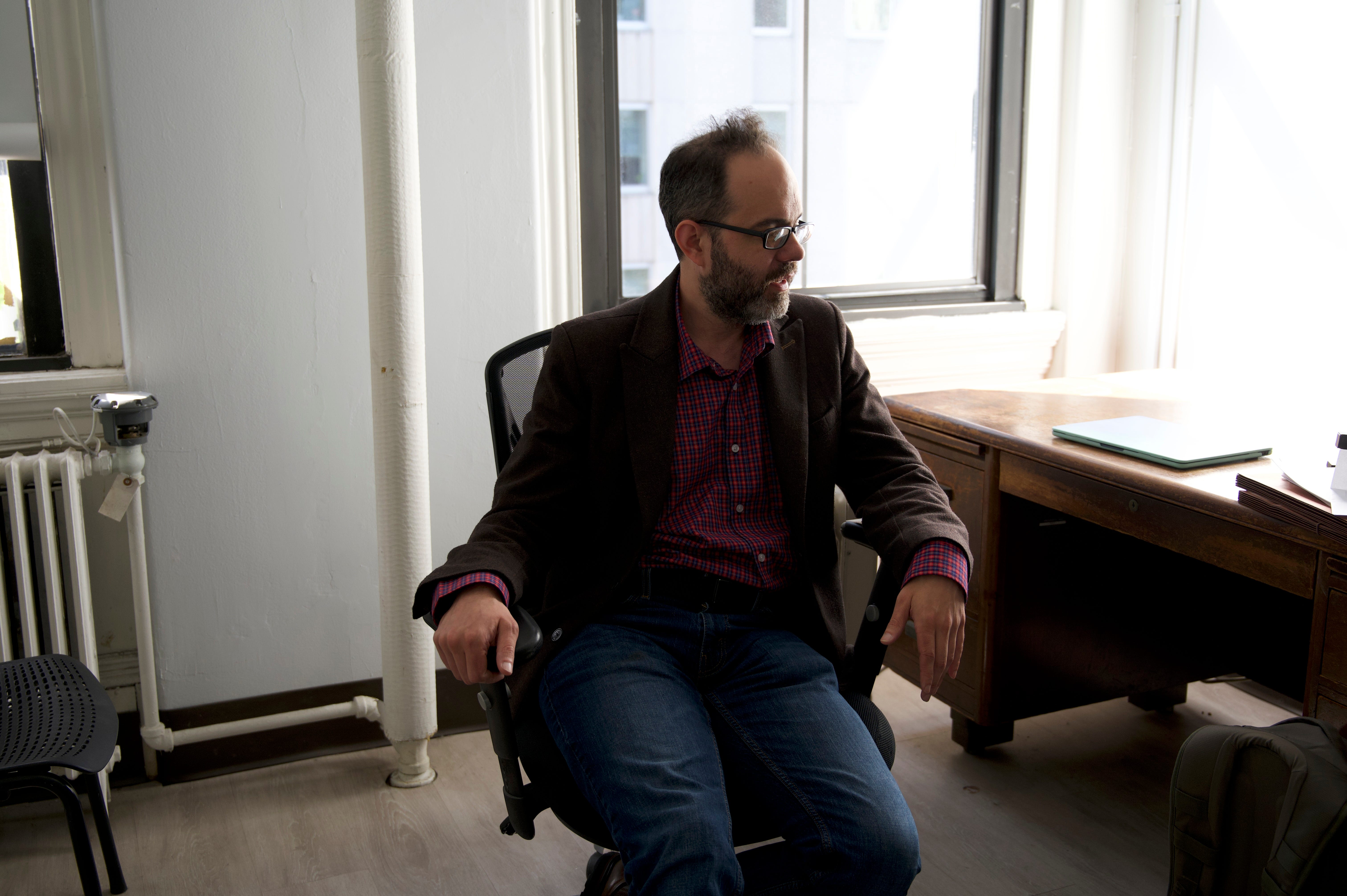
AN: I think to help you make sense of it—when people are in the flow of classes, there’s not really a moment that feels right to say, “John, you are such an amazing professor.” But this unexpected event has almost given people permission to speak. Now that he’s leaving, he has to know what he did for me, how he made me feel, what I learned. That’s what’s happening.
Because behind closed doors, when you weren’t in the room—when I talked about being in your class with Rose or Cassidy or Ava or any of my classmates—it wasn’t that different from what people are saying publicly now. It’s just public. You’re so kind, so easygoing, so understanding, with so many good things to say about our texts. The readings are interesting, and the class is rigorous but not stressful. All these things existed whether you were conscious of them or not. And now that Barnard made this decision that everybody is upset about, everyone thought: We have to let him know, we have to make this petition.
JW: These things are largely new to me. I’ve heard positive things and I’m very grateful—of course I pay attention, I read emails, I appreciate it. Usually it’s a couple of things at the end of a semester, if that, and they’re very positive. I read them with great interest.
And I’m not suggesting everyone should be fawning over every professor. I just mean: Someone two years ago—that person probably doesn’t know that you still remember that course. If you wanted to tell them, they probably wouldn’t object to receiving a positive email.
But what you’re saying is that to you, as a student, it’s not new at all. You’ve already put this into words privately. As a student, you’d have been more shocked if this reaction didn’t happen?
AN: Right. When Rose sent me the petition, I thought: of course. I was almost surprised they didn’t start it sooner. That’s the student perspective. And I hope it allows you to exit this institution, this chapter, with a sense of peace.
JW: Someone I know said—early on in this whole response—that it was like I had died and gotten to be present at my own memorial, hearing all the nice things people said about me. And it does feel something like that.
I know that in teaching and other professions, people sometimes get something like this at some point. But I think a lot of people never get to hear all the good things that people say about them behind their back, suddenly presented all at once. And presented almost as medicine—like, we’re trying to fix this by saying what we need.
I mostly don’t get to know students very well—you read their work, you hear what they say in class, that’s it for most people. But when you have a very positive feeling about a lot of people, and then you see that they’re willing to put in time and effort and verbal ability for something where they get no compensation—they’re not getting credit, they’re not getting anything, there’s no possible reason to do it except that they want to say something—it’s kind of boggling.
You realize: oh, there’s a whole person there. And what I did mattered to that person outside of class. It wasn’t just a tolerable class. It meant something. That’s completely shocking.
I’m sure I’ll be processing this for the rest of my life, whatever kind of jobs and stuff I do. In six months, or ten years, or forty years—that was a watershed moment when I learned that I exist to other people and they don’t object. I don’t mean anything negative by the “before”—I just mean: this shocking revelation. You made an impression on a bunch of people, some of whom you never even spoke to. Not everybody talks in class, not everybody sends an email. Some of those people are out there, and you were in their lives and they never said anything—which is fine. But then there was this whole other set of things they had to say. It’s beyond belief.
Nobody wants to lose their job. And I think anybody would want this. A friend of mine—I won’t give his name—when I showed him the petition a few weeks ago, he said: “I think this is a fantasy that everybody has—that if they were wronged, people would stand up for them and say, ‘No, that’s not right.’ And you’re actually getting to experience that. It’s literally happening.” And I think that’s right.
I couldn’t have even thought of such a thing. Everybody lives in fantasy a lot of the time, countless things that never happen that you think about. But this is more than fantasy. I’m sure I never fantasized about anything like this. How could you even think of such a thing?
And people are putting their name on it—signing their name to the notion that this person did a uniquely good job, something unusually useful or worthwhile. It’s just beyond belief.
More people probably get fired at some point in their life than get something like this. So in a way, the firing is kind of ordinary, and I’m getting this gigantic bonus alongside it. Not unique, but unusual. And just this very personal stuff from people I think highly of, people I remember well—and you’re surprised to see that you actually meant something to them personally, even though it was supposed to be just this contained, professional interaction.
AN: Was my interview too intense, or were you okay?
JW: Just be yourself. That’s exactly what I wanted.
AN: Thank you, professor.
Update: On May 20, after the initial publication of this article, Sundial learned that Columbia has hired Professor Wright to teach its Literature Humanities course. The new contract is expected to last three years, as opposed to his one-year renewable contract at Barnard.
Mr. Nagin is an alum of the Dual BA program with Trinity College Dublin. He is the editor emeritus of Sundial.
The opinions expressed in this article are solely those of the author and do not necessarily reflect the views of the Sundial editorial board as a whole or any other members of the staff.
During the Cold War Barnard's Russian dept was so powerful I crossed over from Columbia to take my conversation courses there. (One of my Barnard teachers was Vladimir Nabokov's sister.) Prof. Wright should abandon the shrinking American colleges and apply to American intelligence work or NATO or Columbia Journalism. Unlike Barnard's administration, they understand the urgency of understanding the culture which gave rise to Putin, the culture of a people that has been willing to lose one million men in a war over, primarily, lost national glory incomprehensible to the West. Tam russki dyk, as Pushkin said of the Russian spirit.
The only reason to go to Barnard has just left the building… Bakka John.