


Union Theological Seminary (UTS), on 120 St and Broadway, is a bit of a strange palimpsest. As you enter the door, you are welcomed by their motto, a play on Christ’s Beatitudes from the Sermon on the Mount: “Blessed are the activists.” In case any Columbia students were uncertain–Jesus did not say this. You may see advertisements for an “interreligious seder” with Cornel West, a UTS faculty member, as a special guest. You may even recall their recent mention of an “Iftar dinner & galvanizing talk” with 2024 Visiting Professor Mohammad Abdou, sponsored by the “Queer Muslims of NYC.” The conversation was titled “Death to the Akademy: How To Be a Thorn in Their Throat Amidst Snakes in the Grass.”
And then you look up at 120 St., alternatively named after Reinhold Niebuhr, an influential twentieth-century theologian and professor at UTS, or you walk into Burke Library—which I had the opportunity to visit this semester for a couple of term papers—and are greeted, as you enter the elevator, by an absolutely stunning stained glass artwork of St. Francis.
I could continue listing examples of the beautiful history of UTS written over by vulgar activism. The point is that the mission of Union Theological Seminary—in part, perhaps, because the Seminary has been a forward thinker in progressive theology—has descended into amorphous “spiritual” language. It’s rather clear that “the god” that the Seminary worships is social justice. The Seminary even admits this on its website, where they claim that their mission “lives out this formative call to service by training people of all faiths and none who are called to the work of social justice in the world.”
I find the Seminary to be a living embodiment of the problem with social activism at Columbia, while also having a kernel of the solution: The people, though they don’t realize it, yearn for conservatism—and by conservatism I mean God.
Columbia students subscribe to nearly every other ideology but social conservatism. The onus for this unfortunate trend lies with how conservatives articulate themselves. In the popular sphere, they are a harrowing mirror image of the problems of liberalism because both are a type of modern morality. Classical liberalism, as we may define it, is borne of the French Revolution, and Burkean conservatism right after.
G. K. Chesterton described this new morality in his 1905 Heretics, in the chapter “On the Negative Spirit.” Chesterton articulates here what might be called a “Second Fall.” As the biblical narrative goes, when humanity first fell, it gained knowledge of Good and Evil. But now, under our “modern morality,” all we have left is “the problem of a human consciousness filled with very definite images of Evil, and with no definite image of good.” The effect of this is the new golden rule, which is, “that there is no golden rule.”
I interpret Chesterton in the modern day as elucidating just how negative conservatives are—both as a set of viewpoints which attracts some of the most bitter people and as a disposition which is solely about negating the efforts of their liberal counterparts. This is unfortunate, as I believe that an optimistic vision of conservatism is what will make Columbia students happy—in the classical, eudaimonic sense of the word. I know it made me so, and I thank Columbia for turning me into such a conservative—though I doubt that was the institution’s intention.
Conservatism, however, can function as a form of progressivism when it becomes a weak antiquarianism. This is when the conservative is merely a reactionary to any new ideas, and believes that he must advocate for the ideas of yesterday. It is often quipped that a conservative is just a liberal from 20 years ago. At times, I do not disagree. This is what happens when you have a constantly changing goalpost; it gives the sense that the liberal is the true civilizational standard, and it is the conservative who is making unnecessary noise with his finger wagging for the sake of being disruptive.
I see this attitude most vividly in the style of the most commonly-employed conservative commentary. Many right-leaning publications’ depth of editorial commentary makes them into dumpsters merely for the opportunity to criticize. I like to think that I, and a heterodox publication like Sundial—to continue the Edenic metaphor—avoid the low-hanging fruit of higher education commentary as opposed to the typical, sensational right-wing populist publications like the Daily Caller and New York Post.
Admittedly, I have been tempted to succumb to pathetic right-wing culture war-ism. I did very seriously contemplate writing about the Columbia Center for the Study of Race and Ethnicity’s drag show, but that would have required attending. On a liberal campus, the stories are all too easy, and the critique is right there. Like any tried and true conservative, I’ve had my fun critiquing activism and DEI, and have advocated for patriotism. I do not regret these ideologically charged pieces and stand by them—someone had to write them at Columbia.
But, to be honest, they do not have a lasting impact. I know that these articles may have caught the eye of a leftist, hopefully from a pique of intellectual curiosity. They may engage with the arguments presented, and may even enjoy hearing the opposing viewpoint, but the standard conservative takes we are more or less used to lack destination, leaving the liberal reader very close to where they began: Suspect of any view which dissents from their dogma either way. I may have made some good points, but so what? One could chalk up any persuasive elements in my more polemical writings to the kind of rhetorical flattery Socrates condemns in his dialogue with Gorgias.
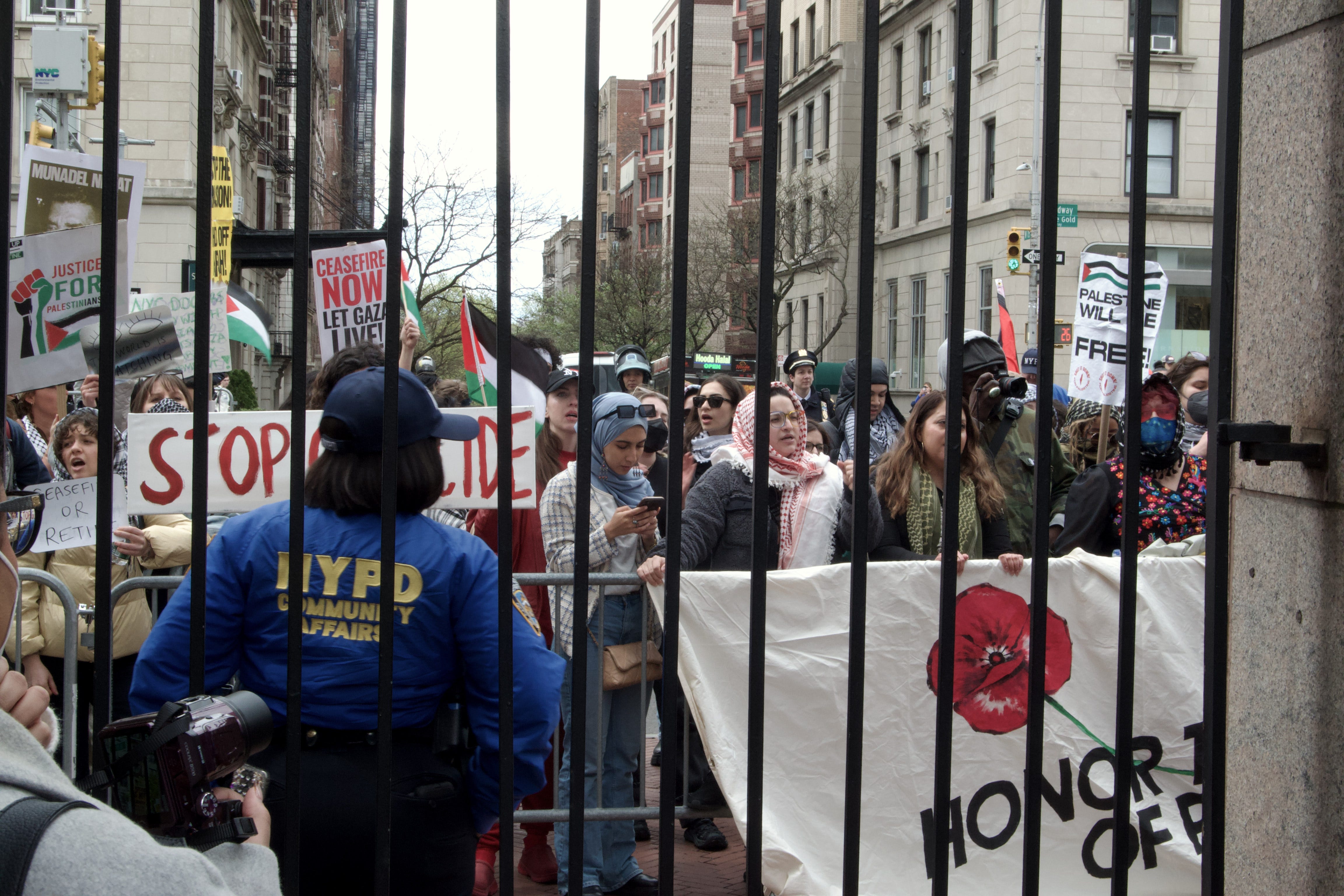
Ultimately, these arguments, however persuasive or however much rhetorical flourishing I or any other Sundial writer may have included, do not really get to the heart of the problem. The progressive student is generally attracted to their viewpoints because, at the most basic level, they are drawn to hope and optimism. Leftist activism is the cheapest form of this: The promise of a glorious tomorrow invigorates students with the belief that, though there may be Evil, it will be extinguished.
However, progressive thinking is not protected from the modern golden rule. This form of optimism, because it is detached from a narrow vision of perfection, turns into a vague aimlessness. We have witnessed this with the decline of UTS, which started out with its mission to educate Presbyterian ministers, its involvement in the protests of 1968, participation in the cultural revolutions of the 80s and 90s, and is now down right sacrilegious with no sign of slowing down.
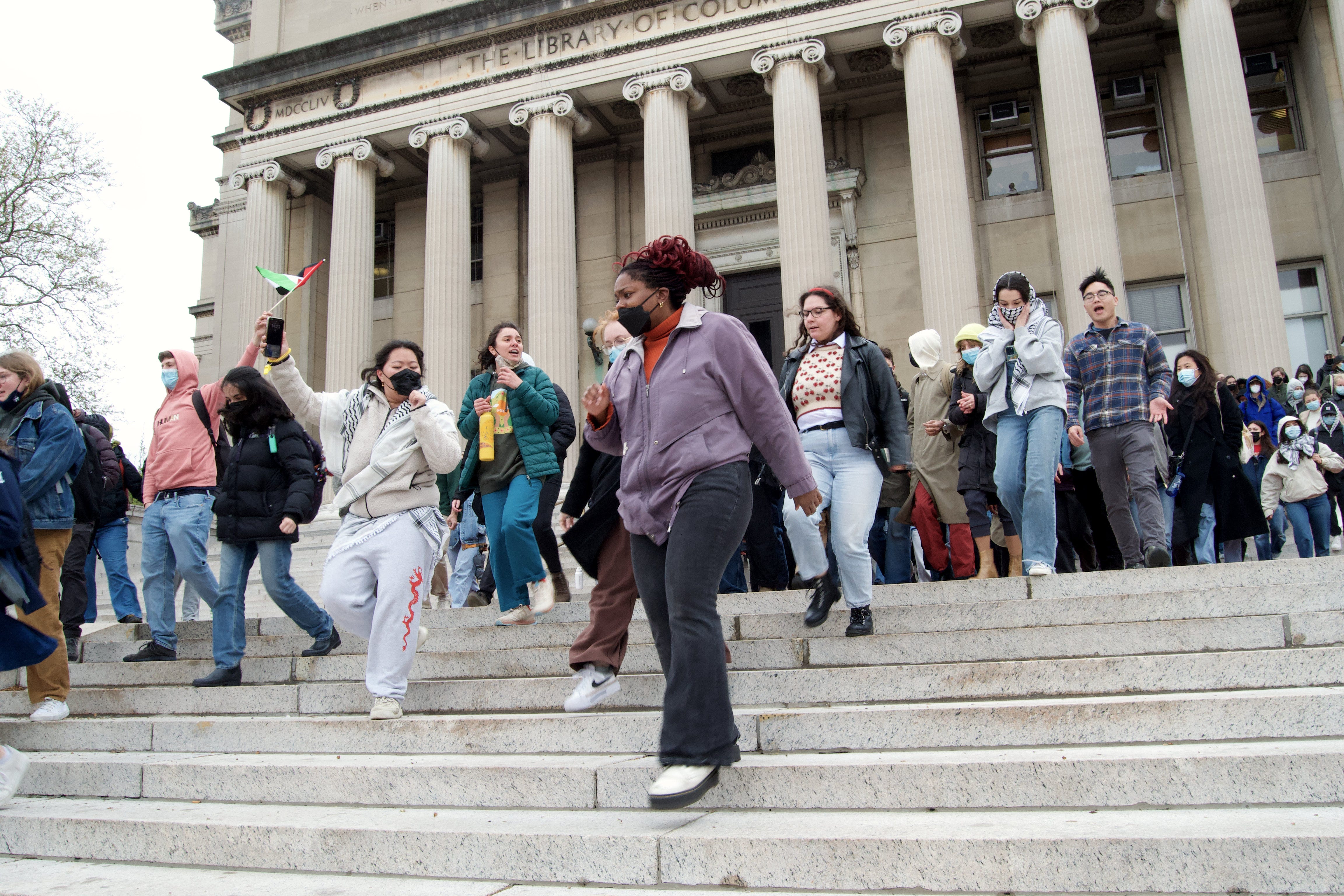
Just from my four short years at Columbia, I have witnessed the same student body pivot from pro-abortion advocacy, to Israel’s initial military response to Hamas’ terror attack, to the university’s response to the student’s response, to the NYPD’s response, and then to the Trump administration’s response, then back again to Israel (but this time their unjust violence in Gaza), and then to climate change, and then climate change and Israel, and then back again to the University.
I would describe the activists—whether they clothe themselves in theological or spiritual language or not—as pantheists. They are worshipping the effort of social justice in every pursuit they take on, utilizing totalizing language as if that is the ultimate cause. But as we know, the City of God will never be fully actualized: Even when, the City of God, for the activist, a communist utopia. But to glorify whatever cause one takes up as the effort which will bring one closer entails a complete rejection of transcendence. The effect of this is it gives well meaning students a perverse kind of optimism: flourishing amid permanent dissatisfaction.
Though I often utilize the liberal counterpart for my point, modern conservatives are not much better at this, which makes the vision of conservatism even worse than liberalism, because at least the latter can articulate some sort of faux positivity.
Conservatism as I understand it, should be a recognition that spiritual and eternal matters are of primacy rather than the passing fads of temporal issues. This can manifest in different ways in the policies we associate with right-wing movements, but for the Columbia student, it can offer the most positive, most hopeful image: That there is more to life—so much more—than centering oneself on the latest political drama, social concern, or even political feud.
It may manifest in certain enduring principles, such as concern for the nuclear family, certain economic liberties, abortion, and so forth. But one can, in theory, advocate for all of these while still embracing a modern morality of pessimism, one invested in changing fads. That is not all conservatism amounts to. It is above all a recognition not only that tradition is a good thing, but that there are enduring values and a recognition that we are made for a kind of perfection that transcends any merely physical form.
When I use the word “conservatism,” I really mean the vision of “tradition” as articulated by Josef Pieper. For him, tradition is not beholden to any specific form. He explicitly rejects the antiquarianism of those who cling to external forms while ignoring the core idea. That core is the recognition that “the world proceeds from the ungrudging goodness of God; that God holds in his hands the beginning, the middle, and the end of all things.” Tradition for Pieper ultimately comes down to a single principle: That there is one tradition with a determinate content, reducible to the recognition of absolute Goodness as the origin and end of all things.
The consequences of students rooting themselves in this tradition are profound. External forms—institutions, initiatives, policies—may come and go. But once we acknowledge the inherent goodness of our initiatives, of our fellow neighbors, and of our existence itself, it gives a deeper meaning to all of our diverse passions and interests—even activism. What might seem corny becomes, in fact, sanctified through this more fundamental vision. I call this conservatism because it is, at its core, a commitment to that one enduring principle that was revealed to us.
In Fear and Loathing in Las Vegas, Hunter S. Thompson wrote the following retrospective of 60s activism:
“I think, was the handle—that sense of inevitable victory over the forces of Old and Evil. Not in any mean or military sense; we didn’t need that. Our energy would simply prevail. There was no point in fighting—on our side or theirs. We had all the momentum; we were riding the crest of a high and beautiful wave.
So now, less than five years later, you can go up on a steep hill in Las Vegas and look West, and with the right kind of eyes you can almost see the high-water mark—that place where the wave finally broke and rolled back.”
Today, at Columbia, we find ourselves in a similar place. As the tide rolls back, the activists ought to take their momentum and redirect it towards higher pursuits that can last longer than four years.
Ms. Chaudhry recently graduated from Columbia College with a degree in history. She was an editor-at-large for Sundial.
The opinions expressed in this article are solely those of the author and do not necessarily reflect the views of the Sundial editorial board as a whole or any other members of the staff.
If anti-Semitism is equal "Not support Israel government policies, ending US military/Financial support Israel and litmit AIPAC influences on US politics", i guess 90% of Americans are anti-Semites.
The Columbia students protesting the genocide of the Palestinian people span the left /right, conservative / liberal divide.
Better do your homework.