


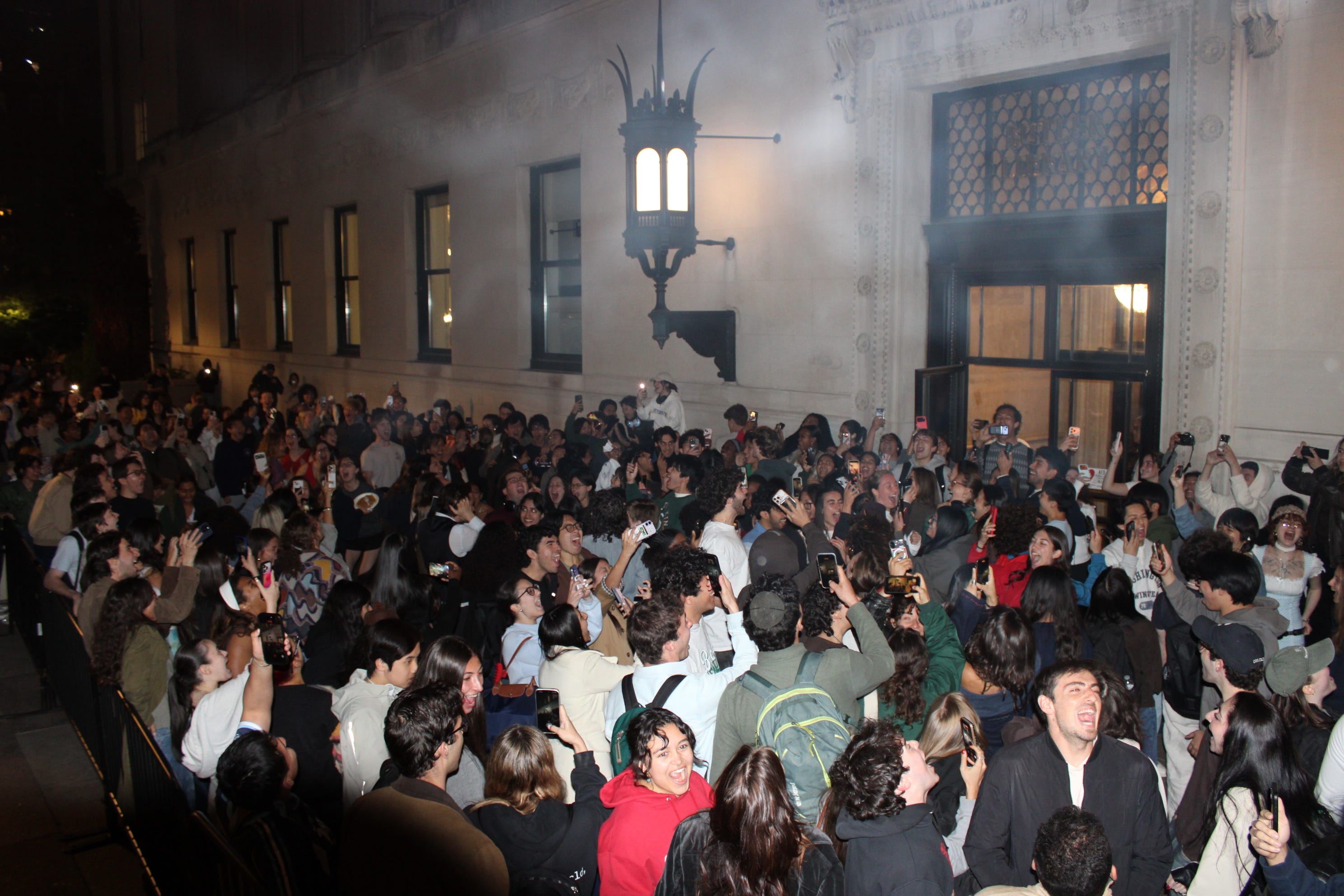
To the incoming freshmen, I wanted to share my two cents: Columbia is an amazing school, maybe exactly because of its negatives. This is the place where you will learn how to become yourself as an adult. Not to say there are not any positives: Apart from the obvious academic rigor, the core curriculum, the amazing faculty, the diversity of interesting personalities, the little things are what make Columbia what it is. The random conversations that lead to surprising friendships, the people you join playing volleyball in front of the Butler lawns when you’re procrastinating, the random side quest you go to that are the most interesting thing you did all week, but that you can’t talk about, and so much more.
Growing up in rural Romania, my transition to embracing a cosmopolitan education in New York revealed as much about myself as it had about Columiba. Determined to go to university in the US since 9th grade, I had received a lot of criticism, jealousy, and praise. A lot of adults encouraged my journey, knowing how this close-minded country couldn’t provide the opportunities an ambitious adult needed. Some adults, especially some of my teachers, heavily criticized my decision. Why would I leave this beautiful country to strive for something more, to do something harder, leave comfort, and become “great”?
While I agree with their claim now, that you don’t need to strive for a materialistic or social standard of “greatness,” what subconsciously angered me then, and especially now, was their lack of open-mindedness. I understood the comments at the time about my arrogance and usual lack of empathy, but what was the catalyst that made me become a more empathetic and down-to-earth man? Coming to Columbia, in New York, and talking with so many different types of people with vastly different ideologies, something that was impossible for me to do in a small town in Romania.
The moment I first arrived on campus, I was filled with combined senses of excitement, anxiousness, and the extraordinary feeling of being overwhelmed. Homesickness and nostalgia hit quickly. To any international students that feel this way, my NSOP leader gave me the best piece of advice that calmed my uncontrollable feeling of sentimentality. Imagine you have two homes. One in your home country and one in Columbia. It’s like going to your grandparents over the summer as a kid because your parents were too annoyed with dealing with you.
I also came to terms with the political reality that you may not be able to go to your home country for a while. From my experience, while video calling your family is not the ideal solution, rest assured you will find a way to stay connected to them. Even when life gets busy, or when you feel down, staying connected with them is the cornerstone that will keep you grounded. Furthermore, like many international students I felt a sense of guilt having left my family. I quickly gravitated towards those other students in similar situations. Even if those people found themselves on opposite sides of conflicts back home, I’ve witnessed them support one another and demonstrate that grief doesn’t have to be a solitary act. At the very least, it should suggest that we can be a bit more open-minded and empathetic with one another.
For all its polarization, if you are craving an intense hunger to expand your social horizons, I believe that Columbia is probably one of the best universities for that. It is a melting pot of interesting and diverse people, who all like to hang out in a limitless set of ways. You will quickly find the many first-timers in New York that will love to explore the city with you, of course inherently discriminated against by the available budget.
While walking to Butler to do your first homework, you will encounter the sometimes mysterious and sometimes obnoxiously loud Butlerian smokers, who will offer you a cigarette. It is important you take it, not necessarily to smoke it, but to engage in conversations with a highly diverse set of personalities with the most interesting (and sometimes horrifying) stories. And don’t worry if you find a stable friend group right away, this school is big, and a lot of students find their group in a semester or two.
Finally, I feel as though you can feel the weight of the history of Columbia throughout the campus; in the way people approach debates and conversations. It is instilled in all of us, whether consciously or not. Having such a concentrated population of intelligent people with strong beliefs should be a positive right? The major flaw in our current discourse, and one expanded upon extensively by Sundial, is that we are not hearing each other out.
I am not always comfortable, but I have a lot of conversations with people with widely different beliefs than me, some of whom have done acts that I consider unforgivable. I want to hear everybody out because I want to understand why people believe what they believe, so that I can learn more about myself and what I really believe in.
The main takeaway we have after we graduate is the ability to know how to think, be open minded, and have as much empathy as possible. We were all selected to this school not only because of our academics, but also because our vibes can foster a community that continues the legacy that was built in the past. We can get along, and we can realize that we have more in common than we have differences, no matter where you come from or how rich or how poor you are. Every one of our different word views and experiences converge at Columbia.
Sooner or later, you’ll find yourselves back in front of Butler, talking with your friends about your summer experiences. There are many new faces you see around, and you see that same excitement and hope in their eyes that you had when you arrived. In no time, you will learn about this place and have your own personal understanding of what Columbia is. But don’t just listen to my opinion. Talk with upperclassmen, listen to what they think about their experience, what advice worked for them, and what’s their most important takeaway from Columbia. Go out, and live your Columbia experience in your way.
Mr. Galbenus is a junior at the Fu Foundation School of Engineering and Applied Science studying mechanical engineering. He is a staff writer and photographer for Sundial.
The opinions expressed in this article are solely those of the author and do not necessarily reflect the views of the Sundial editorial board as a whole or any other members of the staff.

Well done Sebi! That’s the method.
Wonderful piece! I immediately related to the opening sentece of your final paragraph: "Sooner or later, you'll find yourselves back in front of Butler ..." I'm an alumnus--received my degree lo these decades ago; and I'm back, absorbing the lectures, poring over the readings, and yes, finding myself standing in front of Butler (prior to entering, of course, to track down that highly-demanded book on reserve).