


Some like it contrarian at Columbia, where appearing beyond convention is practically a convention of its own. Devil’s advocate might as well be another credential on the CV.
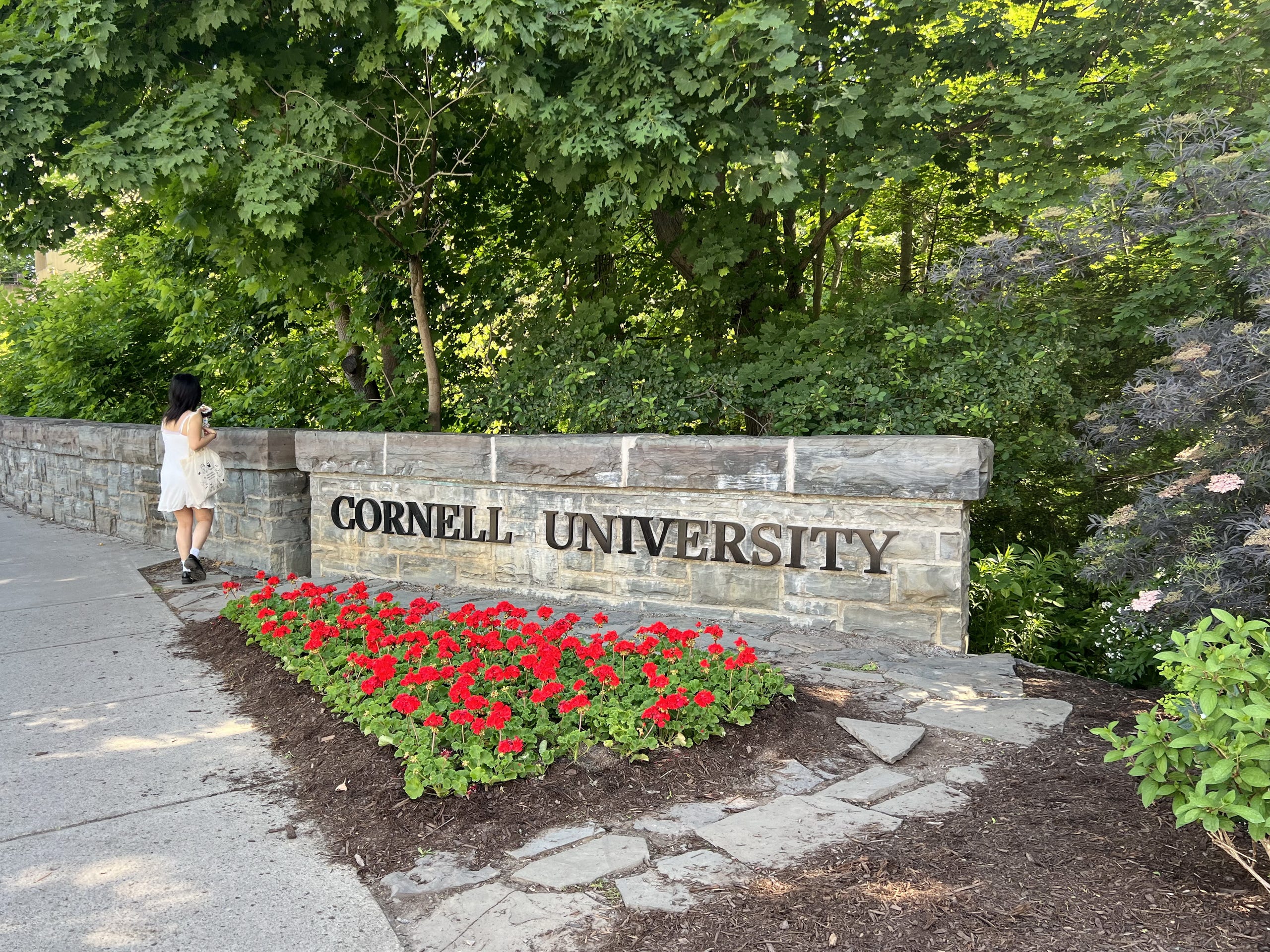
In the wake of the sexual assault allegations at Cornell University, that particular vanity has acquired a troubling dimension: the tendency to mistake provocation for intellectual independence. Commentators have proven eager to unleash their alternative perspectives. Podcast host Megyn Kelly has speculated that the complainant may have welcomed the attention of her alleged assailants because she was “not the most attractive gal,” while author Kat Rosenfield has questioned the condemnation of the accused, arguing women shouldn’t be considered less autonomous just because they’ve taken drugs.
Such contrarian attitudes have made their way to Columbia’s student body. An investigation for online magazine UnHerd, with Sundial deputy editor Nikos Mohammadi contributing reporting, concluded that Jane Doe wasn’t sexually assaulted under New York state law, despite acknowledging the case is unresolved. It also invoked both her drinking and sexual decisions to make a broader argument about women’s responsibility, all while focusing on Scott Kretzschmar, one of the seven fraternity members facing comparatively less serious allegations.
Notably, Kretzschmar’s legal challenge focuses on the fairness of the disciplinary hearings, including the procedures through which he was found responsible for attempted sexual exploitation. The article places particular emphasis on a Cornell adjudicator driving during his Zoom hearing, a procedural concern warranting scrutiny. That Cornell imposed disciplinary sanctions hardly proves that it adequately addressed the allegations, just as procedural irregularities don’t establish that the allegations were unfounded.
But the article largely decenters the four students accused of nonconsensual sex to make a sweeping generalization that men are systematically punished by an ideological campus culture. Moreover, a procedural argument can raise valid concerns without passing moral judgement on a complainant from selectively presented evidence, especially when such judgements reinforce common contrarian narratives about women’s sexual credibility.
In a separate UnHerd editorial, the response to the allegations at Columbia is characterized as a “campus media frenzy.” The editorial cites Columbia students sharing their experiences of sexual assault, fraternities condemning sexual violence, and planned protests. There is reason to scrutinize public response before all the facts have been established, but demanding institutional accountability shouldn’t require dismissing widespread outrage as irrational.
Public condemnation of accused students before the facts are established carries its own risks, but concerns with due process need not be posed as opposition to the prevalence and gravity of sexual assault. Performative contrarians may insist otherwise. Campus sexual assault is an issue that evokes justifiable emotion. Ragebait exploits the tendency to regard that emotion as suspect, inflating what may be a genuine belief into a provocation that garners attention. The ensuing outrage feels like a morally dubious hamster wheel: the ragebaiter provokes someone engaging in good faith, then points to their emotional response as evidence of the mass hysteria they claim to oppose.
At Columbia, where independent thinking is valorized, there is an appeal to being the person willing to tackle the elephant in the room—or to be the elephant, stomping around and challenging prevailing beliefs. Yet disagreement based on faulty reasoning is hardly evidence of intellectual sophistication. Rather, it is all the more pathetic for its pretensions to rigor. When skepticism supersedes critical thinking, contrarianism becomes its own brand of X-pilled conformity.
Of course, skepticism is not inherently misogynistic. The reality is that none of us were present at the scene. It is possible to believe women have agency and should take responsibility for their decisions, including those they may later regret, without suggesting these decisions negate the need for consent. People can regret consensual sex, just as they can initially struggle to accept or articulate an experience of assault. Neither possibility establishes what happened conclusively. Female agency includes the ability to consent to some sexual acts without consenting to others. Treating voluntary drinking and consensual initial sexual decisions as sufficient basis to resolve questions of consent per se does not empower women; it merely replaces one reductive definition of female autonomy with another.
It is possible to entertain uncertainty about allegations without confidently declaring no sexual assault occurred, demanding that Jane Doe conform to an idealized version of victimhood, or dismissing the considerable problem of sexual assault within fraternity culture. When the campus response is reduced to a “media frenzy,” or the distinction between drinking and consent is flattened, nuance is lost in the fog of skepticism’s performance.
Performative male feminists, where have you been? We miss you. The character of the ragebaiter makes one nostalgic for the days when performative male contests dominated the conversation: also chronically online, but determined to win approval through drinking matcha and at least pretending to care about women’s issues.
Whether shaped by social media algorithms or indifference, many male friends and friends’ boyfriends have been completely unaware of the allegations, or unwilling to challenge dismissive comments about sexual assault. “Wait, what happened in Ithaca?” a friend’s techie boyfriend asked, overhearing us discussing it while in line for the club. Others have been curiously quiet, watching the ragebait unfold. Once again, the onus has fallen upon me and my female friends to educate our peers on sexism that extends well beyond fraternity culture, aware that if we assign too much weight to “just a stupid” comment, we risk being accused of overreacting and being too sensitive. I have found that some men in my life are sympathetic when they hear about an incident of sexual harassment on the street; they don’t necessarily apply that same concern to the comments of their peers.
Anyone can be complicit in perpetuating misogyny and simplifying a complicated issue. People of all genders can victim-blame, play into gender roles they benefit from, dismiss women and be ignorant. We’re all laughing along with edgy jokes and falling into invisible gender norms, hoping we’re not too much or not too little, a girl’s girl or chill or somehow good enough. Since we’re going to perform anyway, one might as well perform something worth believing in, rather than blaming women for the fear they’ve learned to inhabit.
Contrarianism doesn’t have to be performative to have consequences beyond getting a rise out of people. An article on consent may be intended as an exercise in skepticism, but its flippant insinuations don’t become less consequential simply because the author is challenging a prevailing opinion. The basic principle of consent is not a contrarian thought experiment, nor should empathy be treated as intellectually unserious. Being sensitive to the experiences of others, even if unimaginable to you personally, isn’t a weakness: It is basic human decency.
Mohammadi posted on X: “Consensual sex often happens when people are drinking” in response to Gov. Kathy Hochul’s post that choosing to have a drink is not consent and it’s never a license for sexual assault. It is common for journalists to abbreviate the message of articles for socials; it is lazy to respond to the governor’s statement not with a valid policy critique, but with an observation that doesn’t contradict the original meaning and reads as a passive-aggressive ‘gotcha.’
Online discourse in the era of Elon Musk’s X is often just locker-room chatter with a dearth of visible muscle definition, its sweaty desperation disguised as intellectual courage. This might sound mean-spirited, but I thought I’d exercise my own right to an unsolicited opinion.
Behind this particular exchange lies a substantial debate over intoxication and the legal capacity to consent. The New York State Senate has passed legislation to make it easier to prosecute certain sexual offenses involving people who have voluntarily consumed alcohol or drugs. The bill is pending further action in the State Assembly. Currently, voluntary intoxication alone doesn’t establish that someone was too incapacitated to consent. Under New York law, prosecutors can establish nonconsent through physical helplessness if a complainant was unconscious or incapable of communicating unwillingness, or on other legal grounds tailored to a particular offense. The proposed legislation would expand this standard to recognize an inability to consent when intoxication leaves someone incapable of understanding or controlling their actions, provided a reasonable person in the accused’s situation would have known of their condition. This proposed standard raises legitimate legal questions, but does it really need to be flattened into a tweet?
The consequences of this rhetoric extend beyond online discourse, particularly when students already face substantial barriers to reporting sexual assault. Ragebait may be intended as harmless. It can also convey a blithe disregard for the reality of life on college campuses for women and gender-minority undergraduates, approximately 1 in 5 of whom experience nonconsensual sexual contact or inability to consent, as well as the 1 in 16 men.
Sexual assault is particularly difficult to navigate when there is an 85 to 90 percent chance the perpetrator is someone you know and potentially trust, while trauma can complicate how someone responds to what happened.
Days after the alleged assault, Doe initially responded positively when one fraternity member texted her to apologize, though she later described much of what happened as nonconsensual. Her attorney has attributed her initial response to trauma and denial. She didn’t know that another fraternity member had sent Snapchat messages inviting other men into the room, a detail he did not disclose when Doe later questioned him about how so many people had entered.
Reporting can be exhausting, requiring a student to navigate several levels of bureaucracy with no guarantee of accountability. The interview questions are often invasive in nature, and investigators can misconstrue previous or initial consent as evidence of ongoing consent, which is a false parallel. For example, Emma Sulkowicz, the Columbia activist who carried a mattress as part of her protest against the university’s handling of sexual assault, said she was dismissed by the New York Police Department, who focused on her consent to an initial encounter, rather than her allegation that consent did not extend to what subsequently transpired.
Further, students have often described university disciplinary procedures as bureaucratic and drawn-out, with delays that can discourage filing a report. With no guarantee of action and the possibility of a long and invasive process, reporting can feel like an exercise in institutional fatalism. There is also the prospect of retaliation: Jane Doe recently had a SWAT team falsely called on her house. It’s no wonder that less than a third of college women who are raped reach out to a program or resource, let alone reporting.
Free speech is commendable. So is deliberation prior to exercising it, a skill fortunately less difficult than underwater basket weaving. It is not self-censorship to be thoughtful about how one’s words or actions might affect others. Allyship entails refusing to dismiss a joke as just part of who someone is or dismissive language as provocation with a worthwhile purpose.
It would be nice if Columbia men could be feminists, matcha and wired earbuds optional, and go the extra mile to call out stupid jokes others make. At the very least, they should not be bystanders. Perhaps the issue isn’t that we’re performing our values, but that we’re interested in performing intellectual independence at the expense of basic moral standards.
Maybe women want something less fashionable than contrarianism: sincerity, or a genuinely interesting take. But what do I know? I’m just a girl.
Ms. Rohslau is a senior in the dual BA program with Trinity College Dublin and the School of General Studies. She is a staff editor for Sundial.
The opinions expressed in this article are solely those of the author and do not necessarily reflect the views of the Sundial editorial board as a whole or any other members of the staff.
