


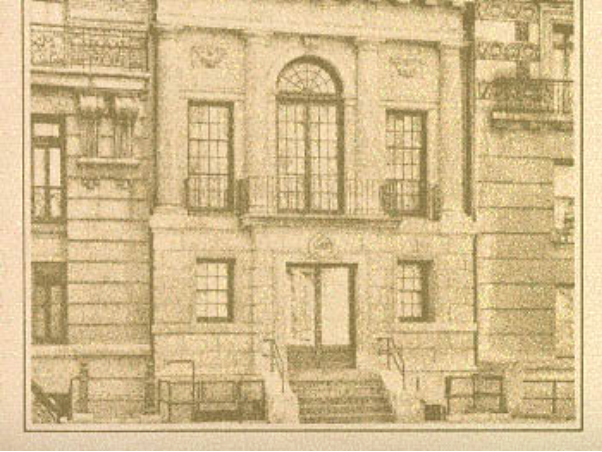
At the south end of Claremont Avenue stands the 612 West 116th Street brownstone, tucked away in the shadows of the buildings surrounding it.
To the uninformed eye, it exists solely within this shadow and nothing more. But those who are familiar with its history can never remove their gaze from its mystique, which stands as a true testament to the rich culture of Morningside Heights. Today known as Casa Hispánica, home to Columbia University’s Department of Latin American and Iberian Cultures, the building has seen a carousel of previous identities. From its origins as a high-class fraternity house to its transition into a pioneering scientific laboratory to its function now as a bastion of the humanities, 612 West 116th Street serves as a testament to the rich history of Morningside Heights.
The story begins with the Delta Phi Fraternity, which was founded at Union College in 1827.
The fraternity also carries the title “Saint Elmo,” a name adopted after the Omicron chapter at Yale transformed into a secret society, severed ties with Delta Phi, and chose Saint Elmo (of mariners and the Knights of Malta) as its patron saint. While the Omicron chapter withdrew from Delta Phi, the Delta Phi fraternity nonetheless became colloquially known as Saint Elmo.
The insignia of Delta Phi includes a Maltese Cross, a symbol used by the Knights of Malta.
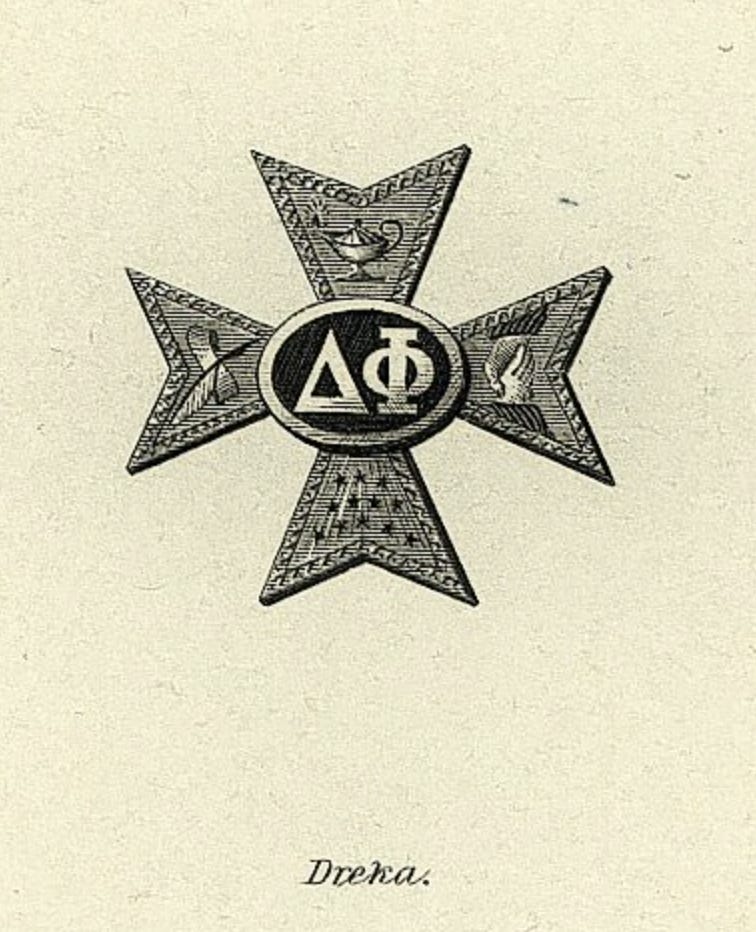
The Delta Chapter of the Delta Phi fraternity was established at Columbia in 1842. The chapter operated under the banner of the “Delta Phi Club” and stayed in a downtown brownstone at 58 East 49th Street. Their house served as a large social hall with rooms for billiards, a smoking lounge, a library, and bedrooms for transient and local members of the fraternity. The Delta Phi fraternity was an exclusive club for the sons of New York City’s richest aristocrats to gather, often with ostentatious feasts accompanied by programs of song and speech.
In 1897, the fate of this billionaire boys’ club came into question as Columbia University announced its relocation from the campus on 49th and Madison Avenue to Morningside Heights, marking the beginning of an exodus uptown. The opening of the University’s new campus was not very popular amongst the elite as it left the Delta Phi fraternity (and all the rest of the University’s college fraternities) stranded downtown.
Nine years after the relocation, the Real Estate Record announced the construction of a new brownstone commissioned on behalf of the Delta Phi fraternity at 612 West 116th Street. Costing a hefty $35,000, the five-story, 25 x 86 square foot building would be designed by renowned architect Thomas Nash, who specialized in church design and graduated from Columbia with the class of 1882. He served as the chief architect for the All Saints Chapel and Trinity Church in downtown Manhattan, restored the interior of St. Paul’s Chapel (where George Washington used to pray every Sunday), and oversaw other projects in the local Morningside Heights neighborhood, such as the Union Theological Seminary.
Nash’s architectural choices imbued the new brownstone with a dignified classical sensibility to match the rising academic landscape of Morningside Heights. It was a symbol of continuity and prestige: a link between the old Columbia in downtown Manhattan and the modern university taking root uptown. It was built in harmony with its neighbors, reflecting the quiet grandeur of Columbia’s emerging campus environs and the elite social clubs that defined its student culture.
Specifically, the design choices of the new 612 West 116th Street brownstone mirrored the house of Saint Anthony Hall’s Alpha chapter around the corner, which was erected eight years prior. Saint Anthony was founded at Columbia University in 1847 on the feast day of Saint Anthony the Great. Today, Saint Anthony Hall still functions as Columbia’s premier “secret society” (the closest the University has to Yale’s prestigious Skull and Bones).
The floor plan featured typical rooms for an early 20th-century fraternity, including a spacious library, dining room, smoking room, and chapter room on lower floors, with upper levels reserved for residency.
The fraternity looked beyond the simple pleasures of college life, as members began to expand the reputation of the organization beyond the confines of campus and into political life. This burgeoning activist culture of the fraternity would lead to its end. In 1918, the fraternity was featured in The New York Times with the conspicuous headline “Delta Phi Supports War” (which I assume to be referencing WWI rather than the concept of war entirely). The fraternity’s collective consciousness about the war effort fostered a community steeped in radical identitarian American nationalism. Two Delta Phi brothers joined the Ku Klux Klan in January of 1921.
Those two were Chester Alan Arthur III, grandson of 21st President Chester Arthur, and his roommate, Henry S. G. A. Rau, who served as a captain in the United States Army during World War I and was a lifelong friend of former 26th President Theodore Roosevelt.
Shortly after joining, both men left the Klan in December 1921. Arthur did so quietly, while Rau’s tumultuous departure was reported by newspapers across the country. The Omaha Daily Bee reported that G. A. Rau had “set forth to denounce the Ku Klux Klan.”
On the evening of December 8, before departing for his KKK meeting in Brooklyn, Rau declared at the Delta Phi house that “if he was not heard from in 24 hours, his friends should notify the police.” After a day of unrest, Arthur called the authorities on December 10 to file a missing persons report.
According to the New York Tribune on December 11, “the harmony of the Brooklyn meeting was the voice of only one man, (Mr. Rau)” and that “his voice was the only present in the hundreds present out of harmony.” Rau’s avowed goal of denouncing the Klan by interrupting the Brooklyn meeting made him the victim of their terror. He reported his story in full to the New York Times after he was recovered by his Delta Phi brothers.
In the December 12, 1921, New York Times, Rau’s lengthy story was accounted for in full detail. He reported that on the Saturday following the meeting, he was kidnapped by three to four men in an automobile who “seized him, tore the garments from the upper parts of his body and gagged him with fragments of his shirt.” Rau was tied by the wrists to a tree branch with his own necktie and lashed until his back trickled with blood and was covered in welts. It was then they cut him down with the remark: “Thus endeth the first lesson.”
As a result of this incident, Rau drew unwelcome attention not only to himself but also to Delta Phi more generally. On December 13, Edward Clarke, the supreme vice-president of the Klan, mockingly offered a $1,000 reward to any party that had evidence of the attack to convict the perpetrators of the terror. It was Clarke’s way of calling Rau a liar and publicly ridiculing him.
For the Delta chapter, their eminence was brief: An end to Saint Elmo was near. Bad political publicity and interorganizational war with the KKK meant a decrease to the already-waning chapter size, as people were no longer willing to affiliate with the fraternity. As such, the 612 West 116th Street brownstone slowly emptied out as the young men were enlisting for the military alarmingly quickly. After several decades as a fraternity residence, the brownstone was ready for a new identity, and they were in luck: New suitors were near.
Thomas J. Watson, former chairman and CEO of International Business Machines (IBM), oversaw the historic expansion of the company and wanted a handsome presence at Columbia for IBM’s new Pure Science Department and its Watson Scientific Computing Laboratory. The company came across the vacant brownstone and was excited by the interesting design of the building. The plan was to buy it, refurbish it for IBM occupancy, and then transfer it to Columbia ownership once the project was completed.
Herbert R.J. Grosch, former employee of IBM, recounts the story of planning and transforming 612 West 116th Street from a fraternity house into a computing laboratory in his autobiography, Computer: Bit Slices From a Life.
The process was no small feat. He claimed a computing shop’s most important feature is access, and the small dimensions of the building proved to be a challenge, with no feasible way to install an elevator. In Grosch’s words: “Heavy equipment had to be brought in through the front lobby for the first floor, over iron railings and through large French doors into the library for the second floor, and down through that awkward light well for the upper basement—or, theoretically, through alleys and the back yard.”
Grosch also recounts that the stairwell was rebuilt to fire-resistant commercial standards, the kitchen and dining facilities were torn out, and heavy wiring, entirely different from what the fraternity boys had needed, was installed. The living room of the fraternity house was converted into a reception room, and the waist of the building became a space for “special” machines.
The last transformation Grosch oversaw was the library on the second floor. He lined every wall with walnut shelving to the height of the mantelpiece. At the front, where the French doors needed to be kept free for equipment to be rigged in, matching globes were installed: “Big, expensive, handsome,” as Grosch notes. It was a world-class reference library hosting a wealth of knowledge.
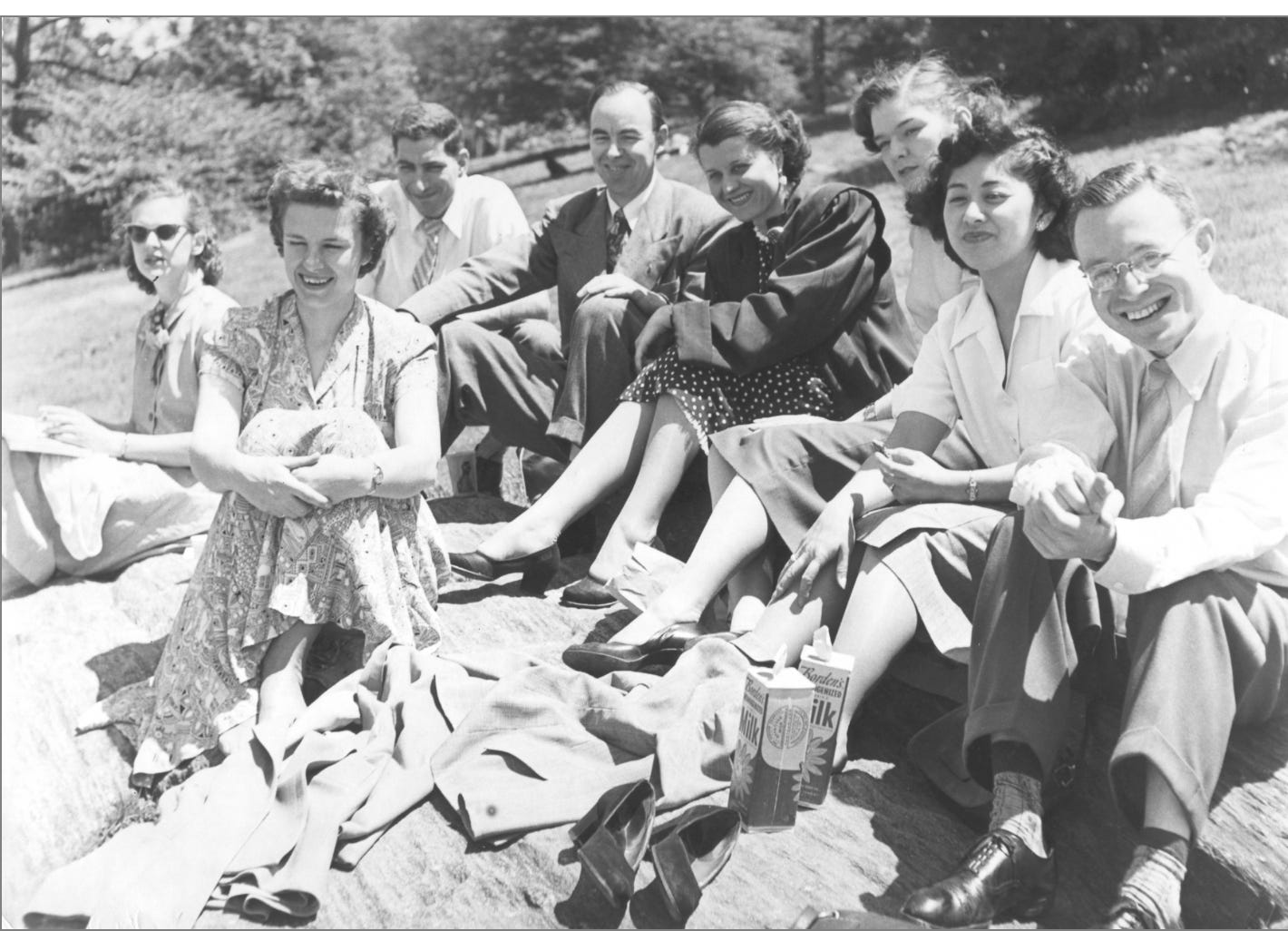
This unlikely fusion of fraternity architecture and technological innovation turned 612 West 116th into one of the most advanced computing centers of its time. The Watson Scientific Computing Laboratory was a pivotal institution for the advancement of early computer science research.
The building was the site of the famous “Watson Laboratory Three-Week Course on Computing,” taught by Eric Hankam of the Laboratory staff. It was attended by about 1,600 people representing over 20 countries. The demand for Hankam’s course was so high that IBM eventually created computer instruction centers at various locations throughout the country. Erik Hankam’s career lasted 40 years with IBM, with his best and most favorite years spent at the 612 West 116th Street brownstone.
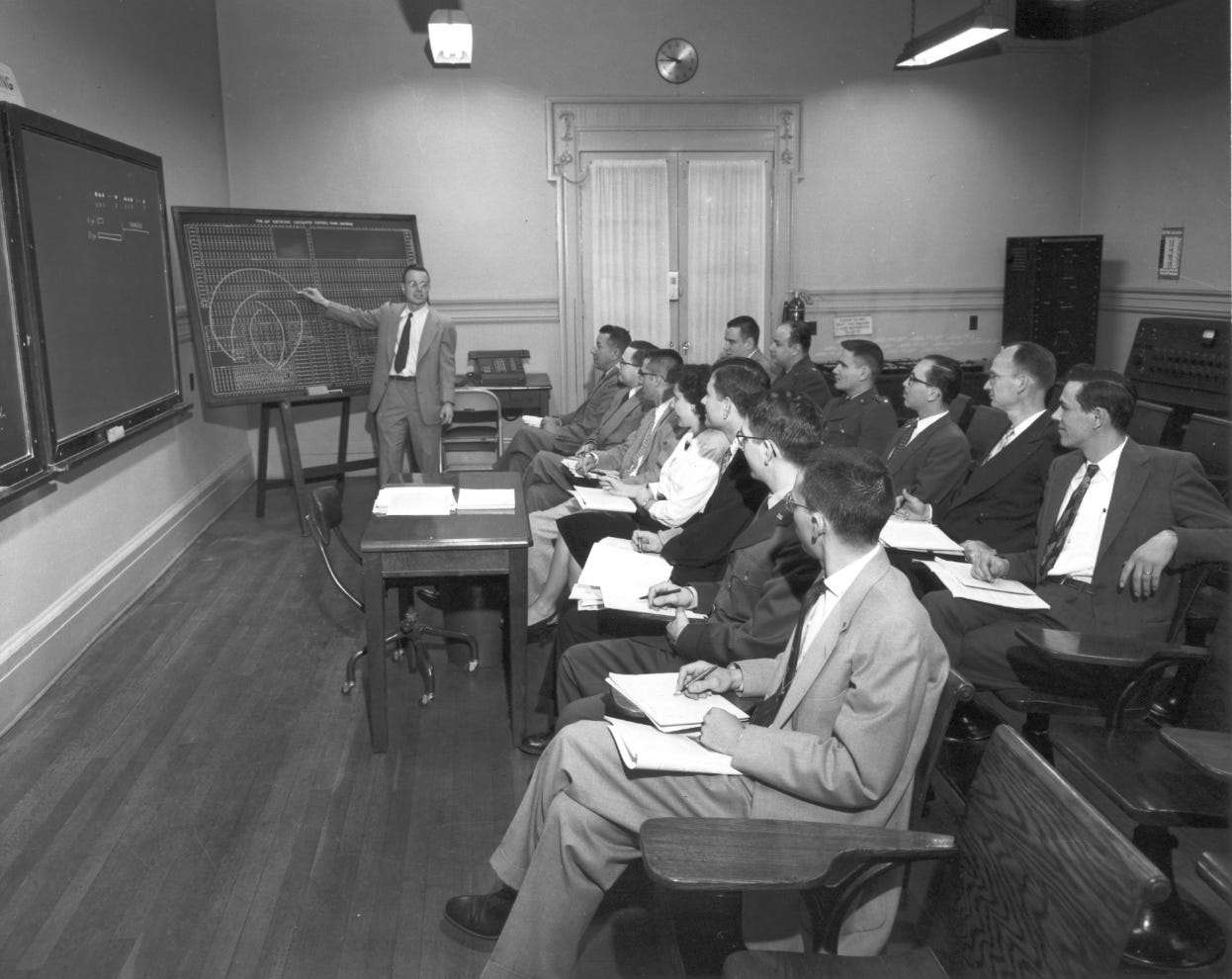
Two important inventions to come out of the Watson Lab were the design of the Selective Sequence Electronic Calculator (SSEC)and the construction of the IBM 610 Auto-Point Computer. The SSEC was one of the first large computers, and the IBM 610 was the first “personal computer” in the sense that it was the first one intended for use by one person and controlled from a keyboard.
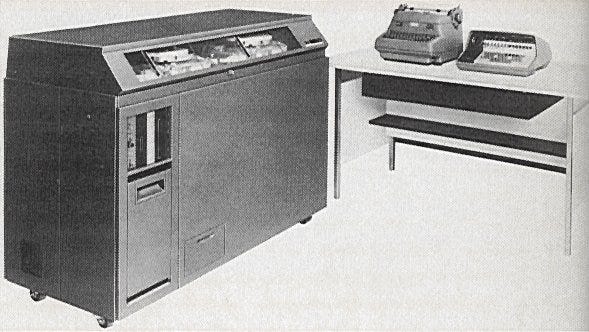
By the late 20th century, the Watson Lab could not exist solely in the cramped fraternity house and was in need of more space. It took over an apartment building at 612 West 115th Street and gutted it entirely to make space for computing hardware. As the Watson Lab gradually outgrew its original location at 612 West 116th Street, Columbia repurposed the brownstone once again, this time for the humanities.
It was renamed Casa Hispánica, and today houses the Department of Latin American and Iberian Cultures. Casa Hispánica enjoys an international reputation as a center for Hispanic and Lusophone studies, providing students with a commanding linguistic preparation in Spanish, Portuguese, and even Catalan. It serves as a hub for cultural study and intellectual exchange, hosting lectures, exhibitions, and events that link Columbia to the Spanish-speaking world.
Casa Hispánica is also home to the Hispanic Institute for Latin American and Iberian Studies, which was founded in 1920 as the Instituto de las Españas. Its central aim is to sponsor and disseminate research on Iberian and Latin American cultures. Since 1934, the Institute has published the Revista Hispánica Moderna, which is a journal in Latin American and Iberian criticism and theory. It is the winner of the 2009 Council of Editors of Learned Journals’ Phoenix Award for Significant Editorial Achievement.
Today, the building’s arched windows and limestone detailing stand as witnesses to a century of transformation. Within its walls, conversations have shifted from fraternity banquets to the hum of tabulators, and finally to literary seminars conducted in Spanish and Portuguese.
The history of 612 West 116th Street mirrors the evolution of Columbia itself: From its secret-society origins and early architectural grandeur to its leadership in modern science and global culture, the parallel histories are tales of adaptation and resilience. Each chapter in the brownstone’s history—St. Elmo Hall, the Watson Lab, and Casa Hispánica—marks a distinct era in the University’s life and in the broader story of New York’s academic and architectural development.
Today, this palimpsest of a brownstone continues to embody the multi-layered intellectual spirit of Morningside Heights, a true landmark of transformation and continuity.
Mr. Gaull is a junior at Columbia College studying philosophy and mathematics. He is a staff writer for Sundial.

Bravo! Best article I've read anywhere in weeks