


Given Zohran Mamdani’s uniquely awful and singularly eccentric opponents, I was not at all surprised on election night last year as I watched the screens at Amity Hall light up with the projection that he had been elected the 111th Mayor of New York City. However, unlike most of my fellow bar-goers that evening, Mr. Mamdani’s win did not make me erupt into ebullient cheer.
That is because I’m deeply concerned about the impact his proposed policies—if enacted—would have on our local community.
In his November 18 op-ed in The Columbia Daily Spectator titled “The global significance of the ‘Mamdani Moment’,” Sid Zadey praised Mamdani’s election as a symbolic sea change that represented a victory for the worldwide workers’ movement. The piece highlighted Mamdani’s identity, immigrant status, and his position on the Israel-Palestine conflict, all of which Zadey asserts will have a cascading, progressive international impact. But the measure of a New York mayor is not their identitarian affiliations, nor their position on foreign affairs (over which they have no substantive power). Rather, the mayor is defined by the effects of the policy they enact—right here in the city—on the New Yorkers they actually represent. And when one dives beneath Mamdani’s platitudinous surface to examine his proposed policies, one discovers deep cause for concern.
The one local issue that Zadey does touch on is housing affordability, a perennial problem in the city and one of the animating issues of Mamdani’s campaign. What can actually be done to turn New York into a place where people can more comfortably live? Not rent controls, which an overwhelming majority of economists agree are ineffective at improving housing affordability. When landlords are not allowed to charge the rent they otherwise would, they are incentivized to convert rentable apartments into condos or to push the negative externality onto tenants in non-rent-controlled units. This contributes to gentrification and decreased affordability in the long run. It also disincentivizes landlords from investing in the upkeep and livability of rent-controlled units—as they won’t be rewarded for making improvements—often causing these units to fall into disrepair. Simply put: Price. Controls. Don’t. Work.
Yet, New York also has the largest and oldest rent control program in the nation. This program is arguably the primary cause for the city’s affordability crisis, along with persistent deficiencies in supply, which is to be expected in the most densely populated locale in America. So, what does Zohran plan to do? “Freeze the rent.” His proposed rent scheme—which would stop rent increases for already rent-stabilized units over the course of his term—would only exacerbate the inflationary impact New York’s rent controls already have on the wider housing market.
While Mamdani does address the unique scarcity of housing in New York, he does not propose regulatory reductions to encourage private developers to invest in new units. Instead, he calls for the public sector to manage the development of 200,000 new “union-built, rent-stabilized homes” over the next decade. However, public housing initiatives are notoriously inefficient, costing more and taking longer to build, while producing units with lower structural quality. Instead of wastefully funneling money into public housing, the incoming Mamdani administration could focus on reducing regulatory red tape and subsidizing private developers with longstanding expertise. However, because such pragmatic solutions don’t fit Mamdani’s prefab ideology, they will be left by the wayside.
The bullets in the foot don’t stop there. Mamdani proposes a 153 percent increase in the corporate tax rate and an income tax increase for high earners, which would make New York City the area with the highest income taxes in the country. In his own words, he plans to shift the property tax burden to “richer and whiter neighborhoods.”
Now, why should Zadey or anyone else ballyhooing redistributive policies care that wealthier New Yorkers and corporations are footing the bill for Zohran’s $10 billion proposed budget increase? Well, to start, none of us at Columbia are spared from Mamdani’s policies: He explicitly calls for the repeal of property tax exemptions for Columbia and NYU. Along with the obscene bill charged to Columbia by the Trump administration, you can expect these levies to trickle down into your tuition costs.
However, even more concerningly, the wealthy residents and corporations that Mamdani plans to target—who are far more mobile than a university—could decide that leaving the city is cheaper than staying and footing the bill.
I’ll admit the evidence is scant regarding whether Mamdani’s proposed tax hikes would inevitably cause a mass exodus of wealthy New Yorkers and corporations. Luckily, because most of his fiscal policies will have to go through a slightly more reasonable Governor Kathy Hochul, he likely won’t be able to institute much of his platform anyway (at least until her term ends in 2027). However, it’s undeniable that, every year, tens of thousands of Americans are leaving New York and California—the two states with the highest income taxes—to Texas and Florida, where no additional income tax is levied.
Mamdani claims that “because New York City has a $1.3 trillion economy” and a robust tax base sporting “new millionaires” each year, the city can afford his expansion of the public sector. But this is only true if New York remains hospitable to those very corporations and top earners who constitute the disproportionate plurality of its tax base. If the city fails to retain these pivotal figures, tax revenues could tumble like a house of cards. Combined with increased public service costs, this could trigger yet more tax increases, spelling a feedback loop of disaster.
This hypothetical is not without precedent: It was New York City’s reality in the 1970s and 80s.
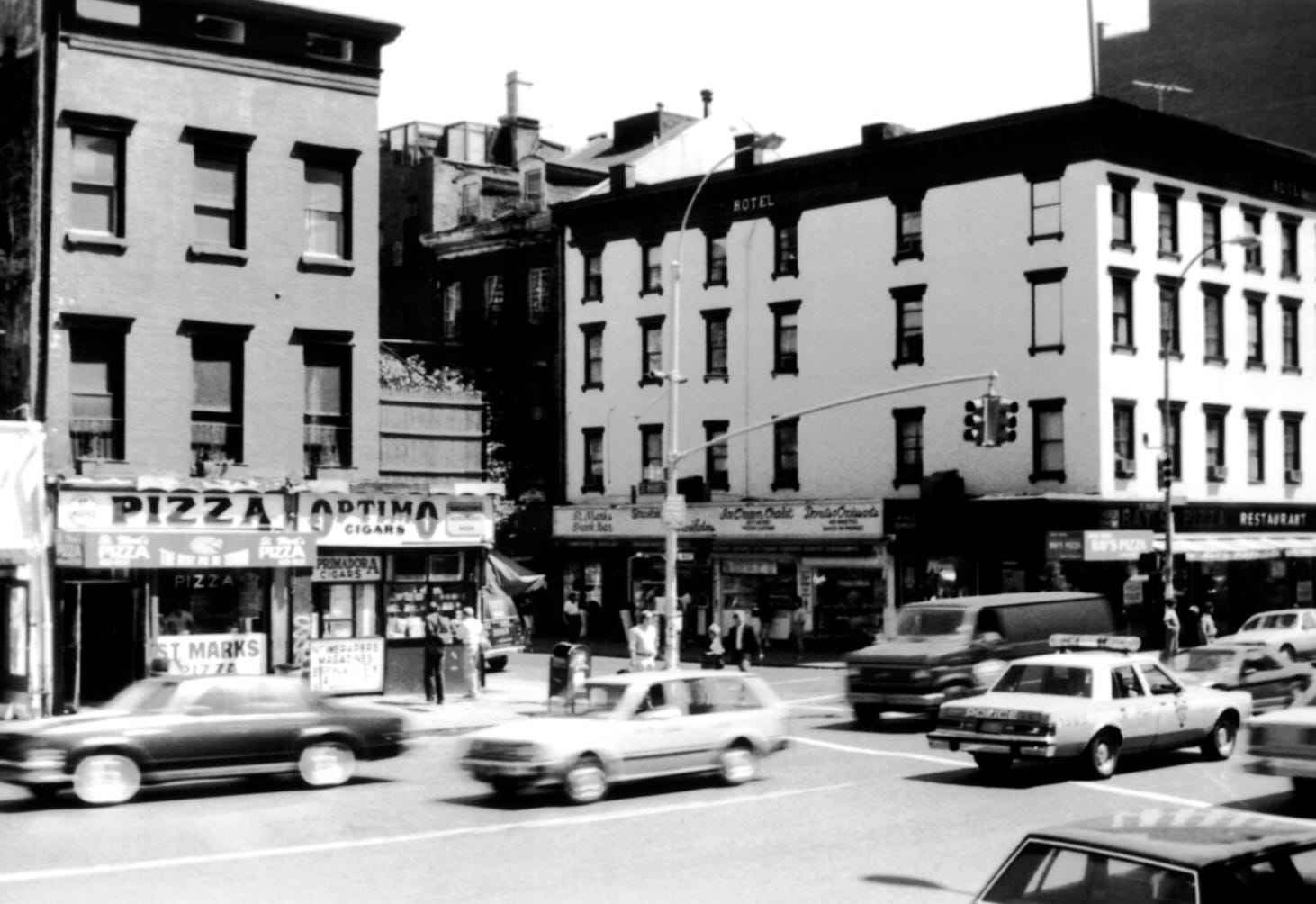
Those of us who were children or born in the 21st century may struggle to fathom the crises that befell the city at this time. High taxes, declining industry, and business flight drove middle-class New Yorkers into the suburbs, obliterating the tax base and leading to chronically underfunded services. As a result, infrastructure decayed while crime, drug abuse, and homelessness metastasized. It was not until the late 80s and early 90s—when the professional services sector filled the economic and population gap—that the city recovered from the brink of collapse.
I encourage everyone to watch this wonderful six-minute documentary, “NYC, 1981,” which captures the bleakness of that particular moment in the city’s history. I am hopeful that Mamdani’s proposals will be sufficiently moderated to keep New York from repeating history and creating the economic conditions for such pointless suffering again.
Despite the wealth of evidence against his rash fiscal policies and overexpansionary public programs, many New Yorkers—especially younger voters and students—are nevertheless ecstatic over his win. How is it that educated and forward-thinking people can support policies that will directly inhibit their purported economic aims? A resolution to this apparent paradox can be found in Zadey’s piece, which clearly values the cultural and ideological commitments of Mamdani over and above the actual impact of his policies: Zadey praises the incoming Mayor for his ostensible plan “to redistribute not just money, but the city’s social capital.”
I presume that by “social capital,” Zadey means the complex amalgamation of factors—especially the extent and nature of one’s interpersonal relationships—that combine to determine a person’s relative social status. While social capital is often related to a person’s economic status, it is not reducible to it. As a category, it is far more amorphous and subjective than the actual resources possessed by any single person. This is why the principle of equal treatment under the law arose in the first place: If a state were to systematically define and treat people according to the qualitative and shifting nature of their interpersonal status, it would have to take on a troubling amount of power with a certain probability of overreach.
It is one thing to say that the government ought to guarantee material security for all citizens; it is another thing entirely to say that it is the duty of the state to rectify the grievances inculcated by naturally arising social hierarchies. To turn government into the playground monitor is to empower the state to interfere in our personal lives in a manner eerily reminiscent of the dystopian hell in Kurt Vonnegut’s “Harrison Bergeron.” One can see echoes of this state-implemented tall poppy syndrome already at work in Mamdani’s proposal to end public school gifted-and-talented programs.
Now, Mamdani will not have the authority to turn New York into a totalitarian state imposing equality of outcome by force, nor does this necessarily seem to be his true intention. But his explicit attack—in rhetoric and in policy—on the productive people and industries of the city is not a symbolic victory for some illusory global egalitarianism. No, it lies somewhere between foolish and dangerous.
What has made New York into the greatest city in the world is its dynamic and competitive atmosphere, where people from across the country and the globe come in hopes of rising to the top of whatever market, field, or industry they have a passion for, be it finance, architecture, law, fashion, media, or the arts. It is precisely the combination of opportunity and inequality that imbues New York with a motivating tension that drives people to succeed. The state absolutely has a role in making sure there is a baseline level of affordability, cleanliness, and public service infrastructure such that newcomers can get their foot in the door. But to attack the very people, industries, and institutions that make New York aspirational in the first place is just plain bad policy.
New York needs all its people—rich and poor—if it is to remain the radiant beacon of a place so many of us know and love. It needs a government that creates stability without impeding upon the freedom of people to be and become who they are.
I wish Mayor Mamdani the best of luck in his tenure, and I hope my concerns are proven to be unfounded. But it is incumbent upon all of us to remember that the mayor is elected by New Yorkers, for New York: not for the world, not for abstract ideological principles, and not for only certain groups of New Yorkers.
Mr. Witham is a junior at Columbia College studying philosophy. He is a guest contributor for Sundial.
The opinions expressed in this article are solely those of the author and do not necessarily reflect the views of the Sundial editorial board as a whole or any other members of the staff.

This is a superb piece—excellent analysis, structure, and writing. It’s nice to know that, despite ample evidence to the contrary, some members of the current generation of university students are able to think and express themselves cogently.
On the substance, I share the author’s hope that Hochul will have the ability, and, indeed, the courage, to be a moderating force upon the mayor’s destructive policies.