


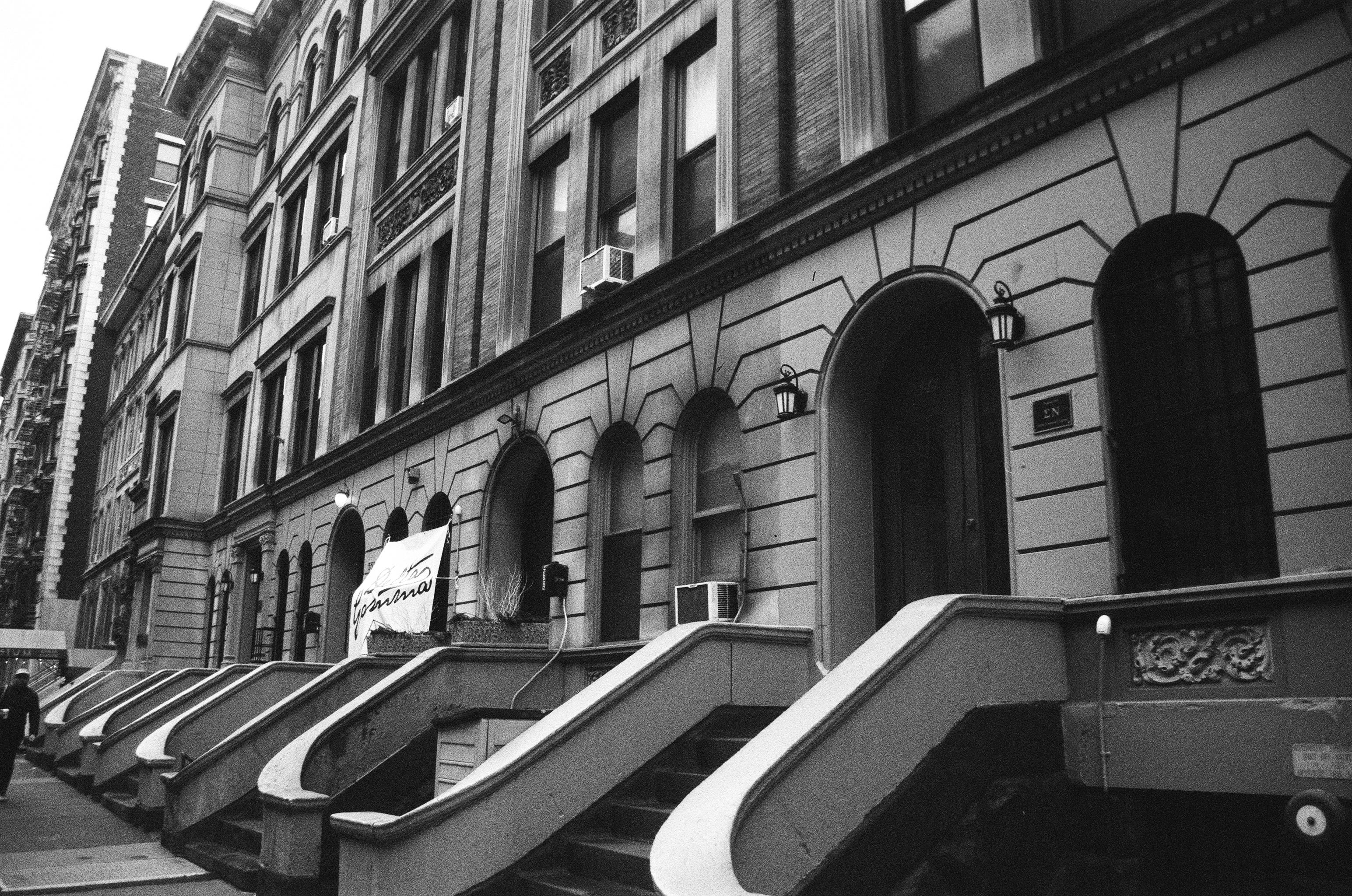
Columbia University owns approximately 300 buildings—housing thousands of residents—across Morningside Heights, making it the largest private property owner in New York City. While talking to many residents across the Columbia community, it became apparent that the University’s role as a landlord has been somewhat subpar. While the university is bound by New York City law to fix problems like water leaks and mold within 30 days, and problems with hot water and heating within 24 hours, many student tenants living in housing owned by Columbia have experiences that show Columbia falling far short of these legal obligations.
Beyond what Columbia is bound to do by law, though, lies the moral responsibility our school has to the thousands of students from around the world that were promised an excellent college experience. By far the most visible mark of how Columbia pays attention to students is the living conditions that they come home to every day.
One persistent issue is heating. New York law requires landlords to maintain temperatures of at least 68 degrees Fahrenheit inside if outside temperatures fall below 55 degrees Fahrenheit during the day; at night, the temperature must be at least 62 degrees inside regardless of the outside temperature. If there is a problem with the heating, landlords must fix it within 24 hours. Although none of the individuals I talked to had measured the exact temperature of their dorms, many described situations that were “too cold” for far longer than the lawful 24-hour limit.
Erica, CC ‘26—who spoke to me under a pseudonym—observed, “It always gets cold before they turn on the heat…the end result is that there’s always two to three weeks every semester when it’s too cold.” She uses a space heater, which she described as “the best 25 dollars I ever spent,” even though it is a banned item. She expressed exasperation at the idea that Columbia regularly fails to get temperatures up in wintertime, but also bans the only item that can provide relief.
Over at Barnard, Lydia, BC ‘27—also speaking under a pseudonym—described the temperatures this past semester as “freezing.” When she first reported the issue, she was told to keep the windows in her room closed, which she was already doing. After her second report, she was told that the person responsible for turning the heat on at night “forgot to turn it on.” Even afterward though, she said her heater “wasn’t doing much.”
Beyond basic heating issues, Erica also described a situation in one of her previous dorms where the girls’ bathroom was perpetually flooded, causing the shower curtain to repeatedly develop mold. Columbia Housing dutifully changed the shower curtain whenever it became moldy, but never fixed the flooding problem that was causing the mold.
Lydia even described a recurring mold infestation that forced one of her suitemates to switch out. “As far as I could tell,” she wrote, “they just painted over the mold.” She also described mold issues under the AC unit and in the bathroom. Mold issues, she said, are very common across Barnard, and many of her friends have had similar problems. Now, she just tries to ignore the mold.
Certainly there are times when Columbia does its job. Nik Cook, CC ‘25, wrote that Columbia Housing was “pretty good,” recalling that when he had mice and roaches in his suite his sophomore year, they quickly set up traps. When faced with a moldy shower curtain, they replaced it “probably the next day.”
Some students have sought to take matters into their own hands, not by dabbling in forbidden equipment, but by organizing. Michael Gross, a law school student, founded the Columbia University Tenants’ Union to help those who are struggling under Columbia’s ownership, including those living in undergraduate and graduate housing, as well as non-affiliates who rent Columbia-owned properties. “We have this form that folks can fill out with any specific complaints,” he explained, listing some of the problems that had been brought to the Union’s attention: a rat infestation, broken elevators, heating issues, and poorly-functioning laundry systems. In the past, the union even had an asbestos complaint.
The most urgent and ongoing issue, Michael shared, was a problem with the cooking gas at 620 West 116th St., a Barnard building that promises “a kitchen with a sink, gas stove, refrigerator, and cabinet space” in every suite. However, the students living there have been without working stoves for the past seven months, according to a December 2 email from the Tenants’ Union to the Columbia administration. The email notes the financial strain that the lack of working stoves places on students who planned on being able to cook in their dorms.
According to Michael, the University still has not offered any meal plan dispensations or reimbursement for affected tenants. When the letter was sent to both Columbia and Barnard Housing, Columbia Housing emailed back and told the Tenants’ Union to email Barnard Housing (which was already a recipient of the original email).
While Columbia’s forgetful administration may take little notice of student comfort or organizing, they might do well to take notice of the legal ramifications of their actions.
Lydia’s mold problem, for instance, is classified as a “Class C: Immediately Hazardous” violation according to New York City’s Department of Housing Preservation and Development (HPD), requiring attention within 21 days if the problem was ever reported in court. With a repeated failure to fix the problem, the University could be fined $150 to $1,200 per day for as long as it persists. For a six-month mold infestation, the fees might total up to $216,000.
For the widespread heating issues that so many of us face, the legal system would give Columbia no time to fix it—fines could start racking up immediately. Given that it persists across multiple buildings, the University might be looking at a full $1,500 every day while the problem persisted. With over 30 undergraduate dorms, assuming 15 dorms every year experienced lack of heat for a week, Columbia might be facing a fine of $157,500 every year.
And yet, even with all of these issues, the Columbia administration might not care. A full student’s tuition, after all, is around $90,000 per year—more than enough to cover for a few chilly dorms, mold infestations, and broken promises.
Every week, when I look at university emails promoting dozens of speaker events, well-being workshops, and administration-organized social activities, I wonder if even a little of the effort and funding that go into these events could be spent making sure that Columbia students go home to a comfortable living space every day. Administrators who spend their days thinking of new and exciting ways to engage students in structured social time would be better served making sure that every student can shower and sleep in dorms with comfortable facilities.
Ms. Weinfeld is a junior at Columbia College studying political science and creative writing. She is a staff editor for Sundial.
The opinions expressed in this article are solely those of the author and do not necessarily reflect the views of the Sundial editorial board as a whole or any other members of the staff.