


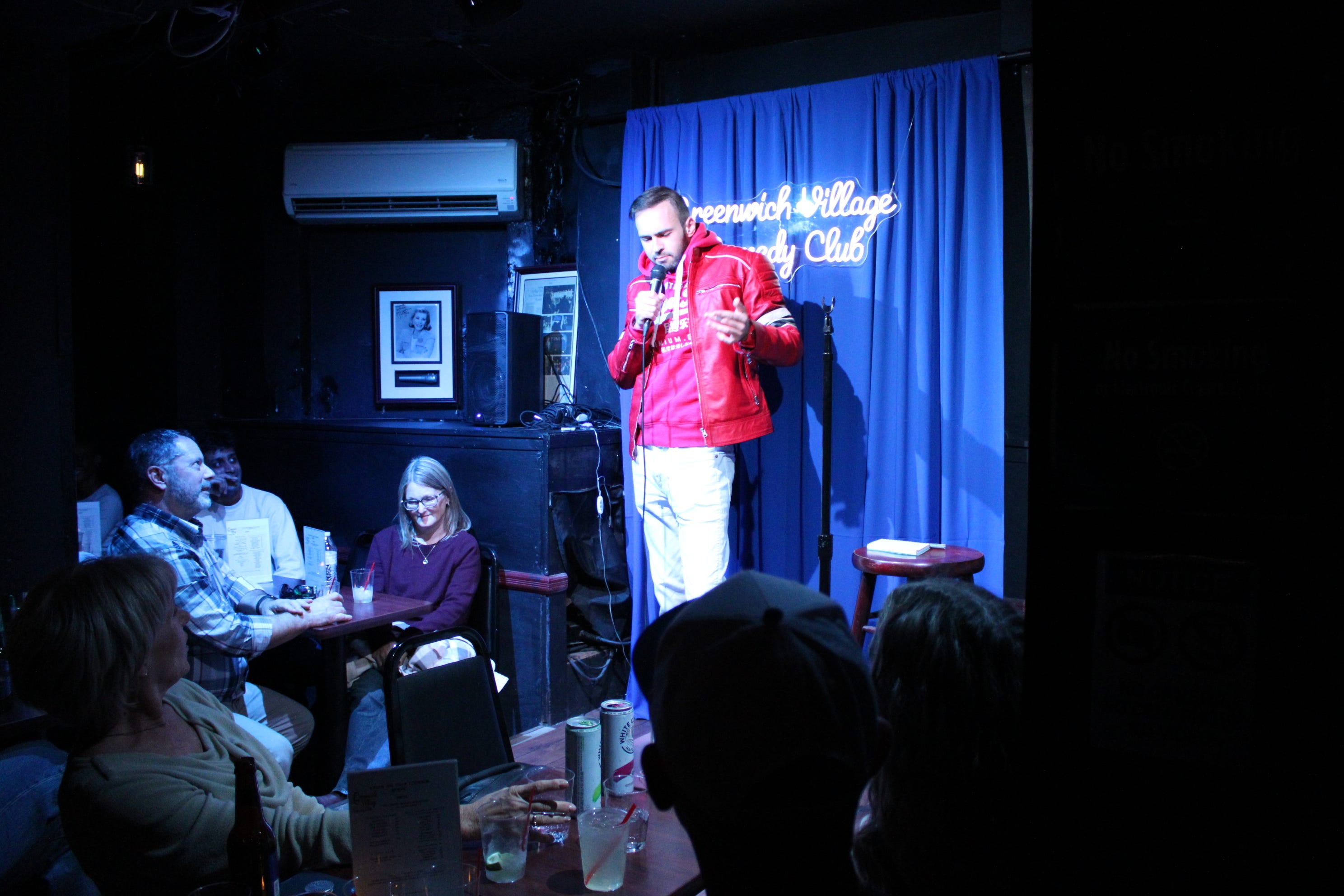
In classes, conversations with friends, and every edition of Sundial, we debate freedom of speech: whether it is under attack, what it protects, and where its limits should lie. Yet we rarely ask the most important question: What does it mean to actually engage with free speech? The answer, I propose, is one you might not expect: comedy and laughter.
Comedy is uniquely designed as a free speech medium. When a comedian, a classmate, or a friend makes a joke, they are not only exercising free speech but testing the waters of “acceptable” ideas in the presence of others. As such, on a theoretical level, true comedy represents the essence of free speech—the open expression of ideas, uninhibited by the fear of repercussions.
Yet implicit—and sometimes explicit—cancel culture on our campus and beyond stands in opposition to this ideal. Cancel culture is particularly detrimental to comedy because it is fundamentally incompatible with an art form that depends on risk-taking and experimentation with the presence of an audience. When the audience is poised to censure “unacceptable” speech at any moment, comedic experimentation suffers.
The consequences of this cultural phenomenon have been clearly felt by comedians. Take Dave Chappelle, for example, who was accused of transphobia due to jokes in his 2021 Netflix stand-up special, “The Closer.” Or consider Nimesh Patel’s 2018 performance at Columbia, which was cut short mid-performance after organizers deemed a joke about gay black men too offensive to allow him to continue.
In contrast to the response from the student organizers of the event at Columbia to remove Patel from the stage, Netflix’s decision to keep Chappelle’s show on air reflects the culture we should strive for. Despite the onslaught of calls to remove Chappelle’s show from Netflix, it not only remained on the platform but became its most-watched comedy special of all time up to that point, and was also nominated for two Emmys. Netflix’s decision reflects the broader principle that a belief in comedic transgression is also a belief in free speech. Like all speech, it is not Netflix or any other group’s job to preemptively determine what comedy is acceptable to platform. That task belongs to society.
Comedy not only illustrates the principles of free speech in action, but also offers ways to foster a more open and thoughtful exchange of ideas. With this in mind, I offer three insights from the world of comedy that Columbia students ought to embrace to improve our campus’s free speech environment.
Insight 1: To laugh, or not to laugh, that is the only question.
Jerry Seinfeld, arguably one of the greatest comedians of all time, recently pointed out that “Comedy is an extraordinarily simple binary outcome event. It’s funny, or it isn’t, and nobody cares really about anything else.” To many of us, this statement seems antithetical to how our peers judge humor today. It feels like Columbia students care about many issues related to the joke, not merely whether it was funny or not. Is the joke harmless or harmful? Is it “punching down?” Does it align with our political or moral sensibilities? The list goes on and on.
Seinfeld argues, however, that all of those objections, and Columbia students usually have plenty, are really just excuses for what we dislike most: a joke that doesn’t make us laugh. When we reason that a joke was harmful or offensive, we are often explaining the more basic truth—that it simply wasn’t funny. In the end, a joke succeeds or fails based on the binary outcome of laughter or silence.
Because of this, good comedy is uncancelable. Not because it is above criticism, but because its value is measured in laughter rather than ideology. Comedians can say almost whatever they want—they just have to be funny. A comedian may lose listeners because they made a joke that was both offensive and not funny. They’re not being canceled for the words of the joke itself, but because of how those words landed.
Comedy ultimately demonstrates that risk-taking isn’t just acceptable, but it can actually be highly rewarding, so long as the goal is to make people laugh. This logic applies outside of comedy as well. We should be willing to engage in ideas and politics that make us uncomfortable, so long as we are doing so in the spirit of genuine truth-seeking. The University is meant to be the quintessential space for this kind of uninhibited pursuit of truth, through rigorous debate and exposure to ideas that challenge us. That’s why it is only in a healthy campus environment that both free speech and comedy can thrive.
Insight 2: Comedy clubs are not safe spaces—and that’s a good thing.
When my friends and I pile into Comedy Cellar, a Greenwich Village staple that attracts some of the best comedians in the world, only one thing is certain: If you’re not ready to get made fun of, you probably should find something else to do with your night. The best stand-up comedians I’ve seen at the Cellar create a dynamic interplay with their audiences. Nothing delights them more than mercilessly making fun of the very people who paid good money to see their show.
The experience can feel uncomfortable. It’s certainly not a “safe space.” And that’s exactly the point. Choosing to be an audience member means being vulnerable enough to laugh at yourself and, for just a moment, not take life too seriously. Ironically, the antidote to safe spaces often leaves everyone feeling more comfortable than when they first arrived. Moreover, the same people who can laugh at themselves are also the ones confident enough to question their own beliefs without fearing that their sense of self will fall apart. We would all benefit from cultivating the kind of secure humility that stand-up comedy requires of its audience.
Insight 3: Comedy is a powerful way of bringing people together.
More important than laughing at yourself is finding moments to laugh with others. Comedian Victor Borge once wrote that “Laughter is the shortest distance between two people.” Laughter creates a sense of connection by signaling that, despite all of our differences, we can in fact see the world in the same way, even if just for a moment. On a campus that often finds much to disagree about, we ought to seek out more opportunities to laugh together.
While writing this piece, I hoped to hear from Columbia’s own comedy clubs about their beliefs on these issues. However, Columbia’s comedy clubs declined to speak to me—even anonymously—about how they navigate Columbia’s polarized environment while creating their art. While disappointing, this refusal perfectly illustrates the problem. If the very groups meant to push boundaries and take risks won’t talk to Sundial, it’s not hard to imagine that the average Columbia student would also be unwilling to embrace discomfort and take similar risks.
When defenses are down, ideas move freely through humor. Comedy reminds us of how free speech functions in action. That’s why my recommendation for Columbia students is simple: take comedy seriously. Seek out comedy clubs or watch stand-up specials by comedians who tackle controversial issues. You’ll step outside of your ideological safe space, learn to laugh at yourself, and become a more open-minded and happier person because of it.
And to the comedy clubs themselves: Consider the larger role your work plays on campus and the sort of comedic environment you want to cultivate. The health of your craft is a litmus test for the campus’s broader willingness to engage with free speech.
As Peter Ustinov once observed, “Comedy is simply a funny way of being serious.” Its seriousness lies in how it teaches us to take risks and to practice humility through vulnerability. In its most authentic form, comedy models what discourse on our campus can and should look like—if we are willing to embrace it.
Ms. Rosenthal is a senior in the Tel Aviv University Dual Degree Program studying Middle East History and Cognitive Science. She is a staff writer for Sundial.
The opinions expressed in this article are solely those of the author and do not necessarily reflect the views of the Sundial editorial board as a whole or any other members of the staff.

Oh, how I miss Rodney Dangerfield! Oh, how this world could benefit from Rodney Dangerfield!
Zionists = Jews who aren’t funny.