


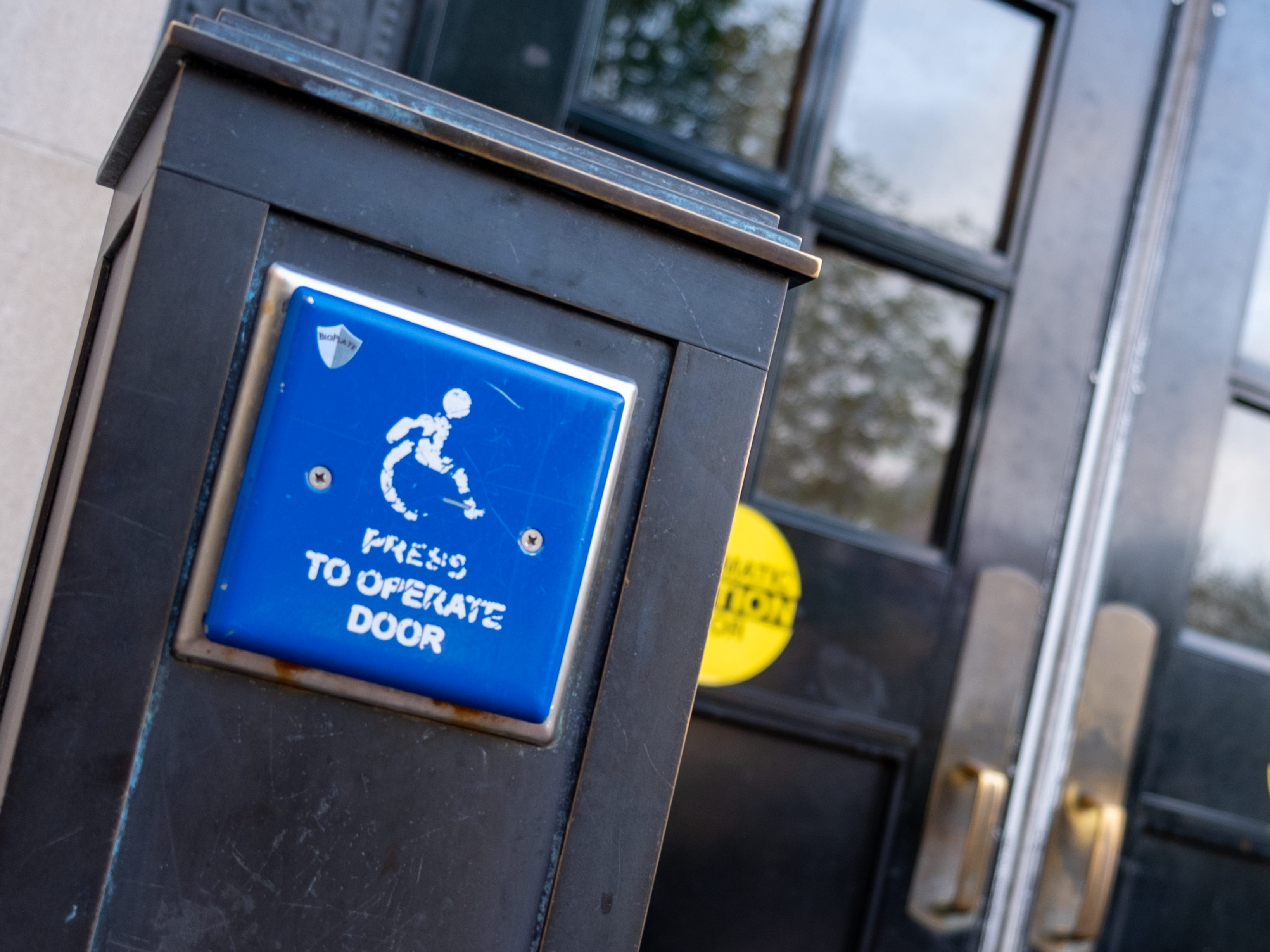
A recent hot-button issue in the world of higher education reporting is, as a December 2025 Atlantic article by Rose Horowitch put it, the “Accommodation Nation.” Horowitch argues that able-bodied students—particularly from elite universities—are unethically gaming the system by registering for disability accommodations. The narrative is simple: students who don’t need accommodations are “faking” conditions to get a competitive edge in the classroom. Other publications have followed suit, releasing articles pushing identical theses to Horowitch, such as the New York Times, New York Post, Fox News, Forbes, and The Times, to name a few.
I am appalled by the implications of these articles. At Columbia, our problem is categorically the opposite of what these pieces allege: despite the growing number of students registering for accommodations, Disability Services at Columbia remains structurally underfunded, procedurally opaque, and at times adversarial. This is not a personal grievance. It is a critique of a system that treats accessibility as the management of ill-intentioned students rather than an exercise in upholding institutional responsibility. Perhaps there exists a minority of students who exploit the system for personal gain. But the vast majority of accommodation-seeking students are being exploited by Disability Services, an office meant to support them. Giving disproportionate attention to inevitable bad actors obfuscates the urgent need for institutional reform regarding Disability Services.
When a student finds themselves experiencing symptoms of what society deems as “less than able,” they rely on Disability Services not merely for paperwork, but for protection from punitive attendance policies, unsafe testing conditions, and bureaucratic delays that can derail an education overnight.
Students need third-party advocates to ensure professors do not retain unilateral power to deny flexibility, to penalize absences, or to fail a student whose only infraction was being human. Speaking from personal experience, I have needed a third-party advocate for classes where professors have said racist and sexist slurs. I doubt that they would handle my disability any more diplomatically.
No accommodation system is perfect, but imperfection is not an excuse for negligence. My first in-person interaction with Disability Services was framed as an ‘orientation,’ fitting for the September air. In practice, it was disorienting and dangerous.
I was initially assigned to take exams in a group testing environment, despite documentation clearly stating that I have stress-induced seizures. A group setting is unsafe because a tonic-clonic seizure in a crowded room risks injury to others, severe distress to students already managing their own disabilities, and medical emergencies that could have been prevented with basic foresight. The last thing a disabled overachiever and a depreciating Ivy League institution needs is headlines of a Class D Felony in the classroom. I will, unfortunately, be unable to request legal representation from the оffice for mens rea after accidentally assaulting my classmate while seizing.
When I raised these concerns at my ‘orientation,’ the advisor admitted to me that they could not name a single type of seizure, jumping up in shock when I told them there are multiple types. How could my advisor offer support without foundational knowledge of a symptom of over 20% of intellectual disabilities?
This was nothing compared to the time I ran into the Wein Hall Disability Services office with an aura begging the front desk, “Is there somewhere I can lie? I am having a seizure!” and he looked me straight in my panicked eyes and said, “That is none of my business.”
Changing unsafe accommodations required repeated follow-ups, delayed responses, and the tacit implication that I was being unreasonable about my own medical needs. At no point was it made clear who actually determines accommodations or how students can appeal decisions without retaliation or delay, even after I asked multiple times. It is hilarious to me how an office meant to serve disabled students seemingly makes them feel subordinate, as if we do not already feel so everywhere else.
One of my accommodations is deceptively simple: a reserved seat. This is a medically necessary condition to ensure that I can safely participate in class without triggering episodes or navigating unnecessary physical and psychological stress.
And yet, even this accommodation required negotiation. I was initially told that, while I could have a “designated” seat, it would be my responsibility to ask someone to move if they were sitting in it. In other words, the accommodation existed on paper, but its enforcement was outsourced to me.
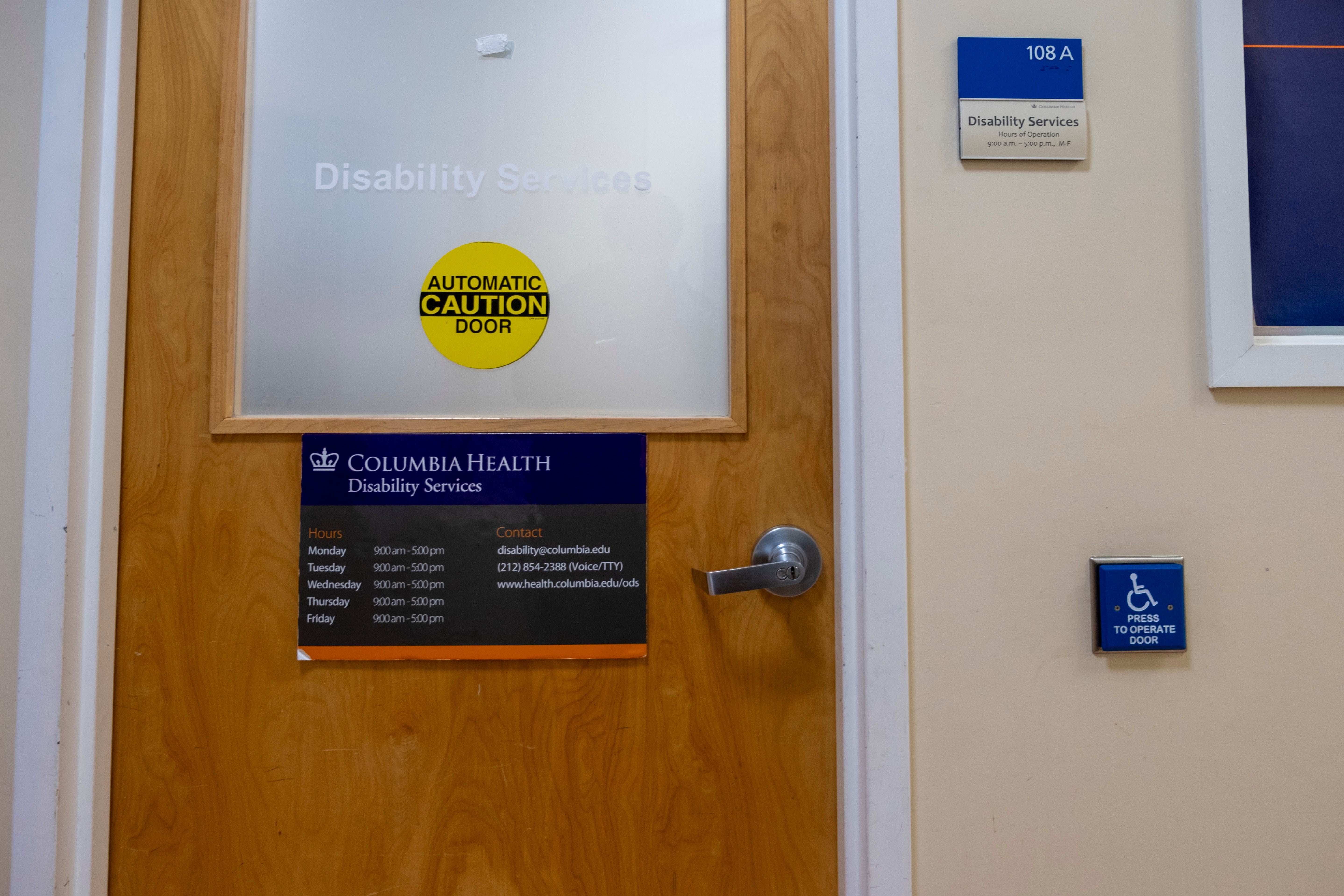
This is what Columbia calls “self-advocacy.” In practice, it means asking a room full of strangers to vacate a seat, disclosing personal medical needs in a public setting, and risking confrontation, dismissal, or embarrassment over something that has already been formally approved. Self-advocacy, as it is currently implemented, is not empowerment. It is an abdication of the institution’s responsibility to safeguard the well-being of its vulnerable students. After repeated pushback, I was eventually granted a fixed, consistently reserved seat—one that did not require me to justify my presence every time I walked into the room.
My experience with Disability Services here at Columbia leads me to ask: Why did the University not enforce the accommodations it had granted itself to begin with? Columbia’s approach reflects a deeper institutional logic—one that treats accessibility as contingent on a student’s willingness to push back. But disabled students should not have to persistently plead for an accommodation to receive protection. The burden of implementation should not fall on the person the policy is meant to protect.
The failures extend beyond paperwork. In comparison to other institutions, Columbia is undoubtedly falling short. Outside of a mere two-hour window, Disability Services does not offer drop-in hours, despite the fact that disability—especially episodic disability—is inherently unpredictable. Students are often notified of exam locations and times with minimal notice. Changes to course registration times appear without warning. In my experience, appointments—by phone and in person—are consistently missed without explanation by the staff being paid to manage this work.
Most concerningly, the Disability Services office is architecturally ableist. Wein Hall lacks a quiet and accessible recovery space for students experiencing medical episodes. There is no protocol for pre-episode care, during-episode support, or post-episode recovery for any of the hundreds of disabilities they recognize. When I sought a place to safely recover after a seizure on campus (one of the many seizures I have experienced in just one semester), the front desk employee at Disability Services said, “That is not my job.”
This absence of care not only affects students with epilepsy. It affects students with panic disorders, OCD, migraines, PTSD, and other conditions that require altered stimulation and adaptive support.
I have had seizures on campus and gone to class immediately afterward—not because it was safe for me or anyone in the classroom, but because attendance policies made absence punitive. I have sought help across Wellness Coaching, Medical Services, Counseling and Psychological Services, and Sexual Violence Response, only to be redirected repeatedly with no clear ownership of responsibility.
The problem with reforming Disability Services is that solutions only come about after harm occurs. Students are told to file grievances through generalized channels that handle everything from parking complaints to co-worker disputes. Disability-related rights, however, are time-sensitive and medically consequential. They require specialized oversight, not bureaucratic diffusion.
If Columbia is serious about equity, Disability Services must be restructured with the same rigor applied to academic integrity or Title IX compliance. At a minimum, the University must complete these seven basic tasks:
First, establish a student ad hoc group to rewrite clear, transparent accommodation decision-making and appeal processes, including timelines and independent review. Hire more advisors (especially if Disability Services continues to use the decentralized model for graduate schools) so that a single staff member at each graduate school is not responsible for thousands of students. Second, require specific medical and disability competency training for all Disability Services staff. Third, create an accessible, fragrance-free recovery space for students experiencing medical or psychological episodes. Taking after peer institutions, the University should implement widely available drop-in hours and emergency protocols for episodic disabilities. Guarantee advance notice for exam logistics and registration changes instead of having students find out the time and location of their exams the night before. Audit Disability Services annually, with findings made public and student feedback meaningfully incorporated. And finally, shift the burden of proof off disabled students and onto the institution to justify restrictions or denials.
Columbia can continue treating these Columbians as an inconvenience that they need to quietly mitigate, or it can accept responsibility. Unlike the narratives pushed in the major publications as of late, the harm of systematic negligence is not a minor inconvenience for privileged and able-bodied students. It is about respecting and uplifting the safety and dignity of disabled students as they attend classes and learn like any other student.
Giselle Sami Dalili is a Master of International Affairs candidate at the School of International and Public Affairs, concentrating in development and governance. They are a staff writer for Sundial.
The opinions expressed in this article are solely those of the author and do not necessarily reflect the views of the Sundial editorial board as a whole or any other members of the staff.

You are a lame.
Professors should *absolutely* retain unilateral power to deny flexibility, to penalize absences, or to fail a student whose "only infraction was being human". Our society literally cannot survive if it gets any softer than it's already gotten over the last couple of generations.