


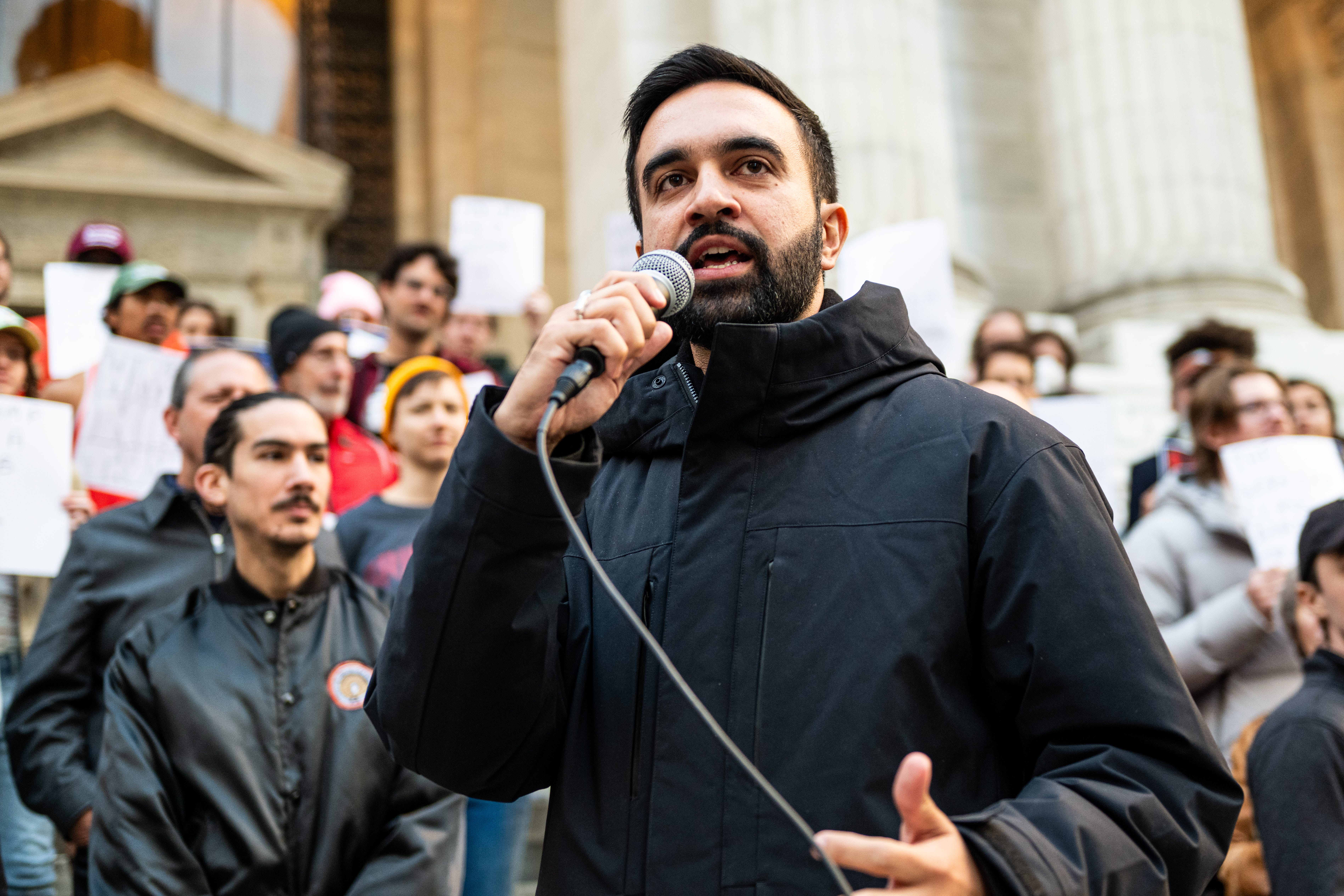
Earlier this month, New Yorkers gathered at Ground Zero to commemorate the 25th anniversary of 9/11. Alongside former presidents Bill Clinton, George W. Bush, Barack Obama, and Joe Biden, Vice President JD Vance, and Governor Kathy Hochul, stood Mayor Zohran Mamdani.
For better or worse, his presence had become controversial in its own right.
In the runup to the memorial, many of the victims’ families urged organizers to bar Mamdani, citing his perceived apathy toward the attacks. They pointed to a 2023 tweet in which Mamdani invoked “the hundreds of thousands who died in the wars that followed” and “the unknown millions injured & displaced.” His critics found the statement overly evasive, leaving the perpetrators unnamed while rebuking the subsequent War on Terror.
Others referenced Mamdani’s interview with contentious left-wing streamer Hasan Piker, who previously declared that “America deserved 9/11.” According to Fox News, “Mamdani initially declined to condemn the remarks but later called them ‘objectionable and reprehensible.’” For his detractors, the episode typifies the mayor’s stance on terrorism, or rather, his patrimony.
Like Father, Like Son
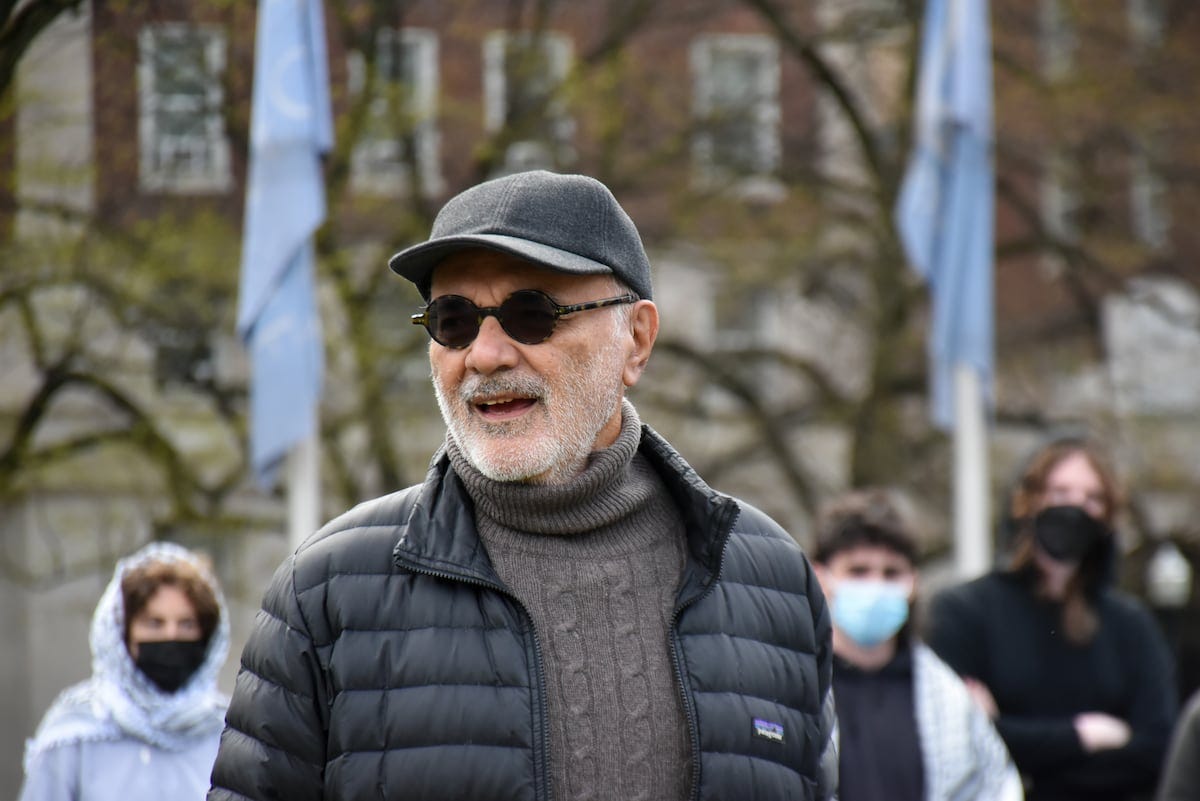
Mahmood Mamdani was born in Bombay (now Mumbai) in 1946 and raised in Kampala, Uganda. In 1972, while completing his doctorate at Harvard, he was among the tens of thousands of South Asians who Idi Amin expelled from Uganda, an experience he chronicled the following year in From Citizen to Refugee (he would later find kinder words for the dictator in Slow Poison.) Mamdani went on to teach at the University of Dar es Salaam, Makerere University, and the University of Cape Town before Columbia hired him in 1999 as its Herbert Lehman Professor of Government. His 1996 study of colonial rule in Africa, Citizen and Subject, won the African Studies Association’s Herskovits Award, and in 2008, Foreign Policy and Prospect voted him the world’s ninth most influential public intellectual. In 2021, he came third on their “Top 50 Thinkers to Rebuild the World” list.
Zohran was born in Kampala in 1991 and moved to New York at the age of seven. In an interview with The New York Times, he credited his father with shaping “his understanding of what the world took, and what it offered.”
9/11 redirected Mahmood Mamdani’s attention from Africa to America. His 2002 essay Good Muslim, Bad Muslim argues that radical Islamism was a byproduct of American Cold War policy; two years later he expanded it into a book of the same title. There he contends that suicide bombers should be understood as “soldiers” rather than “stigmatized as a mark of barbarism,” and draws “moral equivalence” between terrorism and U.S. military operations: “There is an eerie similarity between the American bombing of Iraq and Afghanistan and the al-Qaeda bombing of embassies in Nairobi and Dar-es-Salaam and of the Twin Towers on 9/11.” The mass murder of nearly 3,000 civilians is reduced to a footnote in a broader indictment of American foreign policy, a tactic Zohran reprised in his 2023 tweet.
A “Prosecutorial Agency”
Columbia’s esteem for Mahmood Mamdani never wavered. At a University Senate plenary last December, then-Acting President Claire Shipman offered him a peculiar benediction. Mamdani had just concluded an impromptu diatribe against Columbia’s Antisemitism Task Force. “If I have your permission, Senator,” Shipman said, “I will come to you for guidance.”
Mamdani laughed. “I don’t know what that means, but…”
“I didn’t mean it to sound threatening,” Shipman clarified.
“No administration has come to me for guidance before,” Mamdani replied.
This exchange was conspicuously absent from The Columbia Daily Spectator’s coverage of the plenary. The paper reported only that Mamdani “opened the discussion informally by asking the administration to discuss potential initiatives to bring the University community together,” decrying “infinite fragmentation” and its “terrified” student body.
What had Mamdani said to earn Shipman’s deference? By his own admission, nothing informed: “A couple of days ago, I saw the report of the Antisemitism Task Force, which they said was its last report. I haven’t had a chance to read the report,” he told his fellow senators, referring to the Task Force on Antisemitism’s fourth and final dispatch, published on December 9, 2025.
The report catalogued a litany of abuses: professors smeared Jewish students as “murderers,” hijacking lectures to rail against “genocide.” An instructor in a required public health course told over 400 students that Jewish donors “launder blood money.” One read a Jewish student’s private email aloud to the class and offered a line-by-line rebuttal in front of his peers. Another asserted, “It’s such a shame that your people survived in order to commit mass genocide.”
Mamdani doubled down: “I’ve been following the Task Force for the duration of its existence,” before extracting what he termed “two lessons” from its work.
The first concerned its qualifications. “If the task force did its work, it became very clear that it saw itself not as representing the community, but as a prosecutorial agency.”
This, Mamdani explained, was a pattern he recognized from his study of colonialism: “In British divide and rule, you set up different sections of the population as independent, as autonomous, as separate constituencies, and each begins to see the other as a competitor. Soon you have a fragmented society.”
His proposed alternative: “not a Task Force on separate grievances of separate constituencies, but an anti discrimination task force.” Mamdani’s invocation of “divide and rule” was a crude attempt to discredit allegations of antisemitism masquerading as a principled objection to exclusive remediation.
Shipman’s request was superfluous. Columbia tacitly accepted Mahmood Mamdani’s guidance for nearly thirty years, to its own detriment. It conferred him tenure and accolades, including a seat on the Senate’s Faculty Affairs, Academic Freedom and Tenure Committee. It let him train doctoral students who now replicate his methodology across the academy. My peers celebrated his son’s election, while he watched from the ivory tower.
The Mamdanis continue to exhibit an odd symbiosis: Mahmood benefits from his son’s publicity, and Zohran relishes his father’s academic cachet.
A Family Affair
This was not the first time a Columbia administrator fawned over the Mamdanis. A month prior, Senate Chair Jeanine D’Armiento “congratulated Sen. Mamdani and his family on the election of his son Zohran Mamdani as Mayor of New York City,” stating that “this was a historic election in many ways” and that “it was notable that the son of a faculty member and University Senator was elected to such a position.” Per the Senate’s record, “as a parent herself, she understands that, along [with] the excitement of the occasion, she shares the hopes for the success of Sen. Mamdani’s son and the success of New York City.”
Under D’Armiento’s helm, Columbia became the first university in American history to face a federal civil rights settlement over antisemitism, coughing up $221 million for failing to protect Jewish students. Unsurprisingly, she chose to celebrate the political ascent of a family whose patriarch spent decades propagating antisemitic libels.
If Zohran Mamdani credits his father with shaping his worldview and Columbia’s Senate leadership treats Mamdani Sr. as a worthy role model, the weight of his influence demands scrutiny. What has Mahmood Mamdani taught his son? And, for that matter, what has he taught his students?
The Machinery of Inversion
To understand why Mamdani instinctively reaches for anticolonial theory when confronted with Jewish students’ complaints of harassment, it helps to examine the intellectual project he spent decades constructing. At its core lies a single rhetorical maneuver.
The practice of casting Jews and Israelis as the “new Nazis” ranks among the most insidious forms of contemporary antisemitism. First, it transforms Jewish victims into uniquely culpable aggressors, thereby invalidating their right to self-determination. Second, it trivializes the Holocaust by reducing it to an appropriable political analogy. And most crucially, it forecloses recognition of Jewish suffering in any contemporary context. If Jews are “the new Nazis,” then any claim to victimhood is both implausible and obscene.
In a 2002 lecture at Hampshire College, Mamdani quoted Martinican intellectual Aimé Césaire’s Discourse on Colonialism: “The European bourgeois cannot forgive Hitler for the fact that he applied to Europe the colonial practices that had previously been applied only to the Arabs of Algeria, the “coolies” of India, and the Negroes of Africa,” later adding that “The Holocaust was the imperial chickens come home.”
Shifting his focus to apartheid South Africa, Mamdani described white Afrikaners’ fear of black retribution, before insisting “that same specter must also haunt the survivors of the Holocaust in Israel: yesterday’s victims turned today’s perpetrators.”
Mamdani never mounted a salient critique of Israeli policy. That would be too banal and defensible. Instead, he alleged that Jewish Holocaust survivors, by virtue of establishing a state, were tantamount to Nazis.
They weren’t the only ones who received that charge. In October 2025, a video resurfaced of Mamdani alleging Abraham Lincoln inspired Adolf Hitler.
In Neither Settler nor Native, a 2020 book dedicated to Zohran with the exhortation to “inspire many and blaze a trail,” Mamdani’s project appears systematic, his distortions more brazen. He writes that “Zionists created a Jewish state in Palestine so that Jews, too, could have their rightful homogenous nation-state,” placing Israel in explicit ideological continuity with Nazi Germany. In an interview with Jadaliyya, he rails against the “Judaization” of Israel by Ashkenazi Jews and asserts that the Nuremberg trials “[created] a Germany without Jews and [laid] the groundwork for an Israel without Palestinians. This is the two-state solution that Israel tries to complete today.”
The Nuremberg trials were the first major international effort to hold Nazi war criminals accountable. To claim they “[completed] the Nazi political project” because some Holocaust survivors subsequently emigrated to Israel erroneously implies that Jewish survival was itself a vestige of Nazism.
“Israel without Palestinians” fares no better against a census. Roughly two million Arabs are Israeli citizens, over a fifth of its population. The “purified” states of the twentieth century lay elsewhere. In the two decades following the 1948 Arab-Israeli war, more than 850,000 Jews were expelled or driven from Arab countries, emptying communities from Baghdad to Tripoli.
Ranking Genocides
In When Victims Become Killers: Colonialism, Nativism, and the Genocide in Rwanda (2001), Mamdani pursues a related provocation, insisting that the Rwandan Genocide was more viscerally brutal than the Holocaust.
Mamdani quotes a minister in the Rwandan Patriotic Front: “In Germany, if the population participated in the killing, it was not directly but indirectly. If the neighbor’s son is killed, it is because he joined the army.” Apparently, this afforded Germans a sort of moral extenuation unavailable to Rwandan génocidaires.
The Holocaust was not wholly industrialized. In addition to the roughly 2.7 million Jews murdered in death camps, the Einsatzgruppen and their local collaborators shot as many as 2 million Jews in mass executions across Eastern Europe. These were hardly distant, mechanized killings.
Mamdani’s genealogy of violence traces the origins of “genocidal impulse” to the oldest relic of “organized power”: the Hebrew Bible. Citing the Book of Numbers’ divine directive to wage war against the Midianites, Mamdani treats Jewish scripture as a literal pretext for ethnic cleansing.
Pages later, Mamdani criticizes General Lothar von Trotha, the architect of the Herero and Nama genocide in German South West Africa, for blaming missionaries who supposedly “incit[ed] the Herero with images ‘of the bloodcurdling Jewish history of the Old Testament.’” The Hebrew Bible is simultaneously the primordial source of violence and a racist canard when invoked by German colonial officers. Jewish texts, suffering, and political autonomy all become infinitely malleable in service of whatever argument Mamdani wishes to advance.
An Eye for an Eye
In Neither Settler nor Native, Mamdani engages in a protracted comparison between Frantz Fanon and Hannah Arendt, pitting a theorist of anticolonial violence against a Jewish philosopher of totalitarianism. His sympathies are transparent:
“When Frantz Fanon came face-to-face with native violence, he understood its logic as that of an eye for an eye, a response to a prior violence, and not an invitation to fresh violence. It was for Fanon the violence to end violence, more like a utopian wish to close the chapter on colonial violence in the hope of heralding a new humanism.”
Fanon understood native violence as “life affirming,” Mamdani writes, because it represents “yesterday’s victims who have turned around and decided to cast aside their victimhood and become masters of their own lives.” In the book’s most chilling passage, he quotes Fanon approvingly: “The colonized man finds his freedom in and through violence... For the native, life can only spring up again out of the rotting corpse of the settler.”
Mamdani believes that violence by those he classifies as “natives” differs categorically from violence by “settlers.” The former merits justification and eventual redemption. The latter remains irredeemably evil. Superimpose this framework on the Israeli-Palestinian conflict, as he suggests, and a throughline emerges. Palestinian violence against Israeli civilians cannot be condemned on its own terms. It can only be understood as a “response to a prior violence.”
His absolution transcends the Middle East. In Mamdani’s 2025 book Slow Poison, he offers what a Wall Street Journal reviewer called “an apologia for Uganda’s Idi Amin, a bloodthirsty tyrant like few others in modern history.”
Amin’s regime is estimated to have caused between 100,000 to 500,000 deaths. In 1972, days after the Munich massacre, Amin cabled the UN secretary-general to praise the attacks and declare that Adolf Hitler had been right to kill six million Jews. He later announced plans to erect a statue of Hitler in Kampala. When Palestinian and German terrorists hijacked an Air France jet in 1976, Amin welcomed them to Entebbe, where the hijackers held Jewish passengers hostage until Israeli commandos intervened. Dora Bloch, a 73-year-old hostage who had been taken to a Kampala hospital, was murdered on Amin’s orders.
No reputable historian would volunteer as his character witness.
Mamdani obliged, dismissing rebukes of Amin as a “media-driven preconception.” “Even as Amin ethnically cleansed Uganda of Asians and expropriated them,” he wrote, “he did everything in his power to spare Asian lives.” Amin’s real target, in his telling, was Britain, which had “no intention of taking responsibility for its colonial history.”
Nationalism for Me But Not for Thee
Last September, British-Palestinian journalist John Aziz identified a deeper incoherence in Mamdani’s position. Mamdani presents himself as a “post-nationalist” whose remedy to the Israeli-Palestinian conflict involves not two disparate states but “a single political entity that goes beyond nationalism altogether.”
But as Aziz notes, this proposal “has won no favour with either side. Most Palestinians are not demanding a ‘post-national’ arrangement but a Palestinian nation state—either alongside Israel or in its place. Their struggle is not for the abolition of nationalism but for the realisation of their own.”
Mamdani condemns nationalism as inherently violent while explicitly aligning himself with Palestinian nationalism. He calls for the dissolution of the sole Jewish state, refusing to extend the same prescription to its Arab neighbors. Mamdani’s selective “post-nationalism” functions not as a universal principle but as a cudgel aimed at a singular target: Jewish self-determination.
The Encampment
The views that fill Mahmood Mamdani’s books permeate Columbia’s campus. In April 2024, he was the first faculty member to address the pro-Hamas encampment organized by Columbia University Apartheid Divest.
Mamdani was allegedly spotted on Butler Lawn on April 29, “wearing a dark baseball cap, a yellow scarf around his neck and an orange faculty vest.” Faculty members donned these vests while bolstering the protesters’ “human chain” to prevent Zionist, and often identifiably Jewish students from entering. Perched within, Mamdani described charges of antisemitism as “part of the currency the administration uses to demonize protests like this.”

The encampment ought to have marked the confines of Mahmood Mamdani’s reach.
Here, it’s worth remembering that his son’s political career began as an undergrad. At Bowdoin College, Zohran Mamdani co-founded a chapter of Students for Justice in Palestine. In 2017, performing under the sobriquet “Mr. Cardamom,” he released “Salaam,” a track about growing up Muslim in New York. “My love to the Holy Land Five,” he rapped, referencing the leaders of the Holy Land Foundation for Relief and Development, once the largest Muslim charity in the United States, convicted in 2008 for funneling over $12 million to Hamas. In 2004, a federal court held the foundation liable for the 1996 Hamas murder of Jewish teenager David Boim.
By the time he reached Albany, Assemblyman Mamdani had discovered his inner watchdog. His 2023 “Not on Our Dime” bill would have empowered the state attorney general to dissolve any New York nonprofit engaged in “unauthorized support of Israeli settlement activity” and sue it for at least $1 million. The bill failed to narrowly define the phrase critics warned would disproportionately affect Jewish philanthropic organizations sponsoring humanitarian programs operating over the Green Line, including volunteer ambulance corps and trauma counselors assisting Jews and Arabs indiscriminately. Even Rabbi Jill Jacobs, who spent years challenging settler funding, warned its ambiguity might ensnare groups supporting victims of terror. Democratic leaders in both chambers promised the bill would never reach a vote. Mamdani’s allies reintroduced it this May.
Proof of Concept
In a 2022 virtual lecture hosted by the Carter G. Woodson Institute of the University of Virginia, Mahmood Mamdani assured his audience that “Jews are more secure in New York City than they are in Israel.”
Hours after Zohran’s election, vandals scrawled swastikas on a Jewish day school. On November 19, demonstrators massed outside Park East Synagogue on the Upper East Side, chanting “globalize the intifada,” “death to the IDF,” and “resistance, you make us proud, take another settler out.” The mayor-elect’s spokesperson said that while he discouraged the protesters’ language, “sacred spaces should not be used to promote activities in violation of international law.”
On his first day in office, Mamdani revoked the city’s adoption of the International Holocaust Remembrance Alliance’s working definition of antisemitism. The same order scrapped a directive instructing the NYPD to reassess how it polices protests at houses of worship. Jewish organizations ranging from the ADL to Agudath Israel of America issued a rare joint statement lamenting the decision.
It is difficult to combat what one refuses to define.
The following week, protesters gathered outside a synagogue in Queens, chanting “Say it loud, say it clear, we support Hamas here.” The demonstration forced the early closure of a daycare and two elementary schools. According to the Washington Free Beacon, the Muslim American Society of New York, which boasts extensive ties to the mayor, promoted the event.
In response to the synagogue protests, City Council Speaker Julie Menin, herself a daughter of a Holocaust survivor, and Eric Dinowitz advanced bills requiring the NYPD to plan security perimeters for demonstrations outside houses of worship and schools. The first passed with a veto-proof margin; Mamdani let it become law without his signature. The schools bill passed 30 to 19. On April 24, Mamdani vetoed it, a move leading Jewish organizations called a “profound failure.”
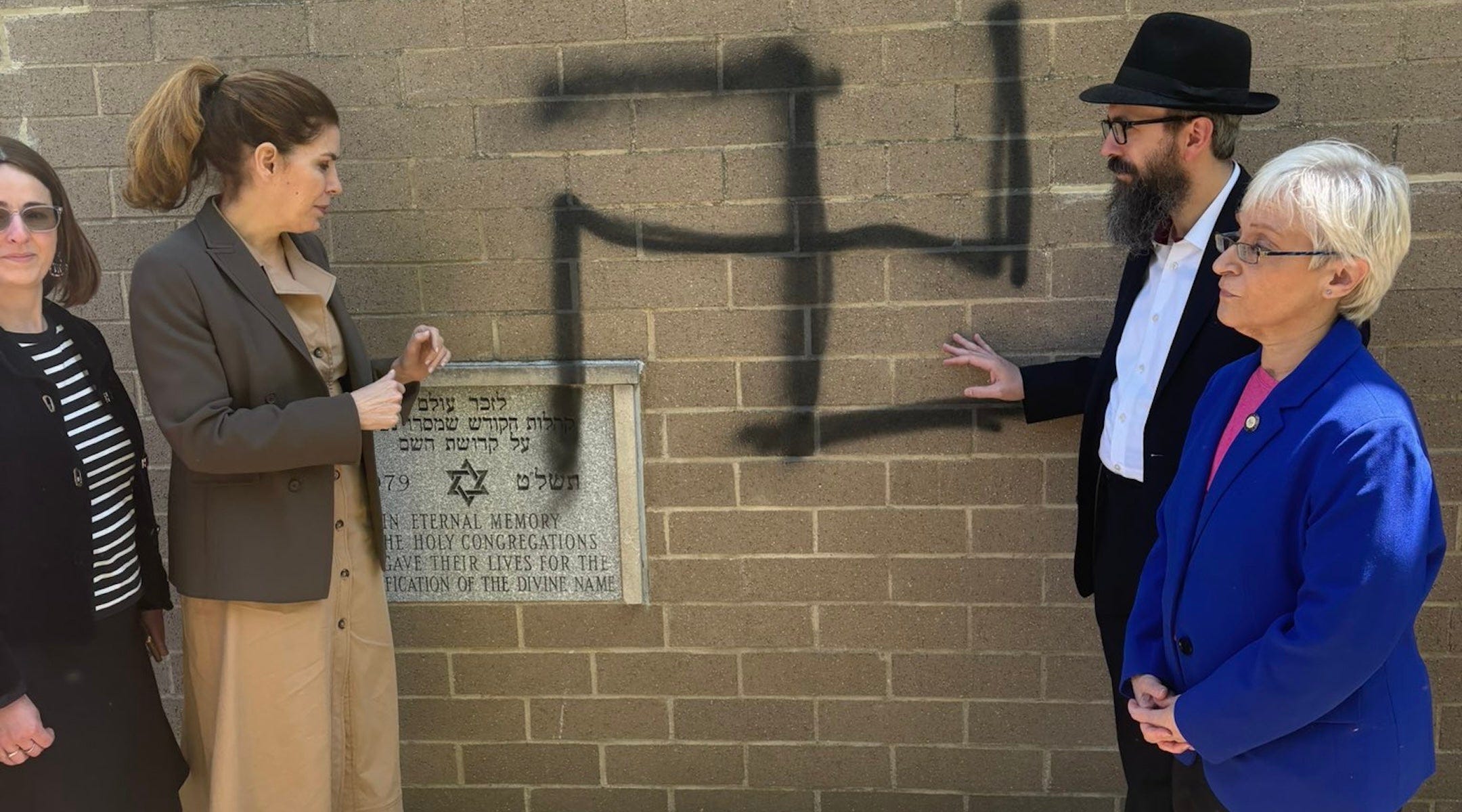
Ten days later, four masked vandals spray-painted swastikas across Queens: on synagogues, homes, cars, a plaque honoring Holocaust victims, and on a Jewish community center, alongside the word “Hitler.” One of the targets houses a preschool.
Earlier this month, the NYPD reported that Anti-Jewish offenses accounted for more than half of all hate crimes, in a city where Jews comprise roughly 10 percent of the population. In August, the Justice Department opened an investigation demanding Mamdani answer for the “unequal treatment of Jewish New Yorkers.”
From One Dynasty to Another
Zohran Mamdani, for all his faults, is deeply pragmatic. Take his relationship with NYPD commissioner Jessica Tisch; notoriously strained, but they appear to have reached a détente. Still, the dissonance between his amiable public persona and checkered past is unsettling.
Just as substantive objections to Zohran’s platform were muffled by cheap ad hominems, so too is much of the recent criticism of Mahmood undermined by vague denunciations of his academic enterprise: African studies. The right cried wolf at the wrong moment and inadvertently catalyzed mass desensitization to the Mamdanis’ genuinely extreme conduct. The left preemptively absolved them of wrongdoing.
I hesitate to blame the son for the sins of his father. Yet Zohran has made no effort to distance himself from Mahmood or denounce his Baba’s penchant for Holocaust inversion. That, coupled with his policy record and ties to terror apologists, invalidates any rehearsed gesture of solidarity with the Jewish community.
At Columbia, support for both Mamdanis is assumed a priori. The Columbia Daily Spectator’s editorial board endorsed Zohran Mamdani ahead of the Democratic primary. And on September 12, Columbia’s Institute of African Studies announced Mahmood Mamdani as its new director (Mamdani previously held the position from 1999 to 2004). Evidently, historical revisionism isn’t disqualifying.
As popular as the Mamdanis are on campus, one would be remiss to excuse Mahmood Mamdani’s poor scholarship. Not only as a political or parochial matter, but because his work has legitimized real harm—and jeopardizes the university’s reputation, especially as he continues to ride the coattails of his son’s ever-so-Instagrammable mayorship.
In his November victory speech, Zohran Mamdani told a crowd of adoring fans that they had “toppled a political dynasty,” referring to his predecessors, Andrew and Mario Cuomo.
Ironically, the Mamdanis are no less “dynastic.”
Ms. Aufzien is a junior at Barnard College and the Jewish Theological Seminary, majoring in History and Jewish Text. She is Co-President of Columbia Aryeh and a staff editor for Sundial.
The opinions expressed in this article are solely those of the author and do not necessarily reflect the views of the Sundial editorial board as a whole or any other members of the staff.
